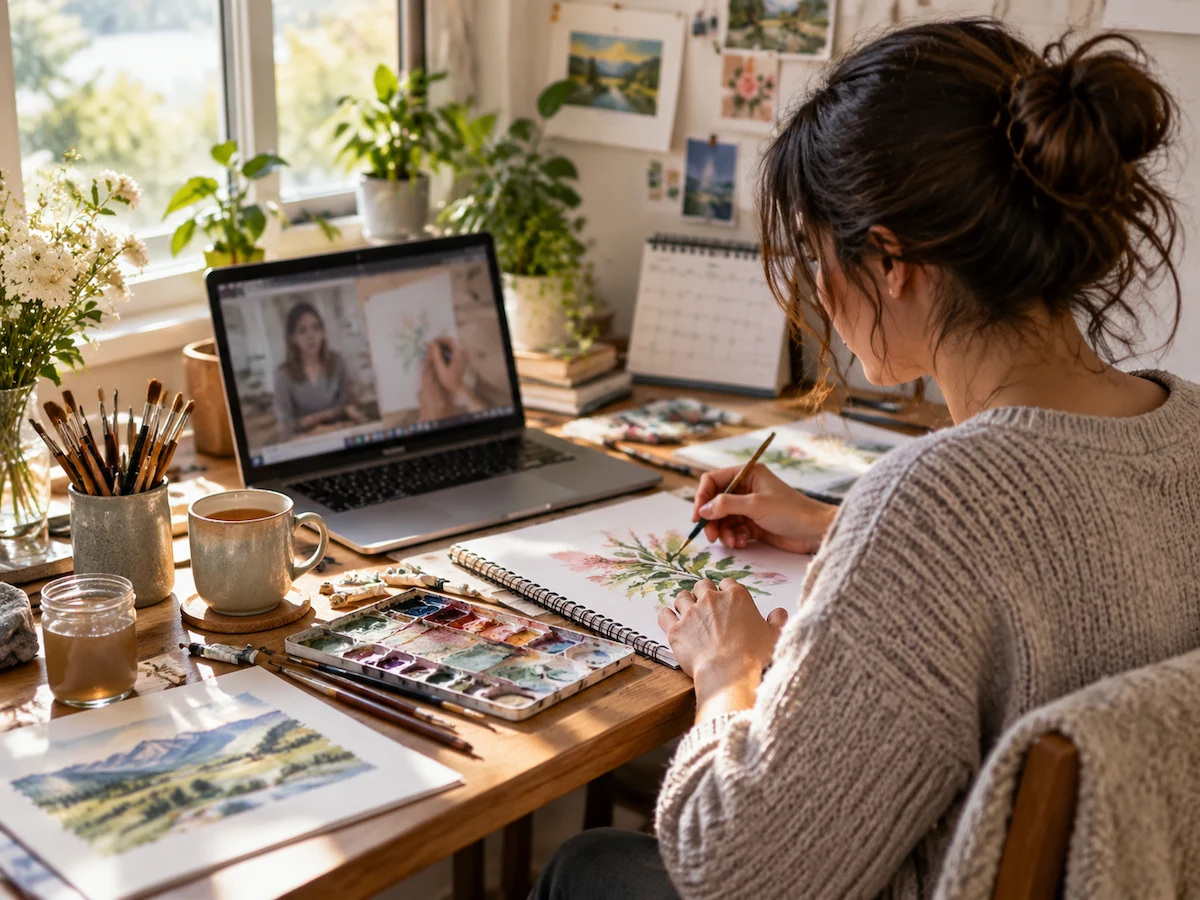
Online art learning helps students keep a creative practice going because lessons can fit around work, study, family commitments, and their preferred learning pace. This flexibility makes it easier to keep drawing and painting consistently after the first few weeks.
However, most programs still ask you to sit in a fixed room at a fixed hour every week. Miss that weekly window, and keeping up with the course becomes difficult. At The Heart Project, we watch such mismatches push talented students away from art long before their skills run out of room to grow.
This guide covers:
- Why rigid lessons fail
- How online art classes compare
- What to check before you pay for a course
Let’s get into it.
How Online Art Learning Keeps Creative Practice Consistent
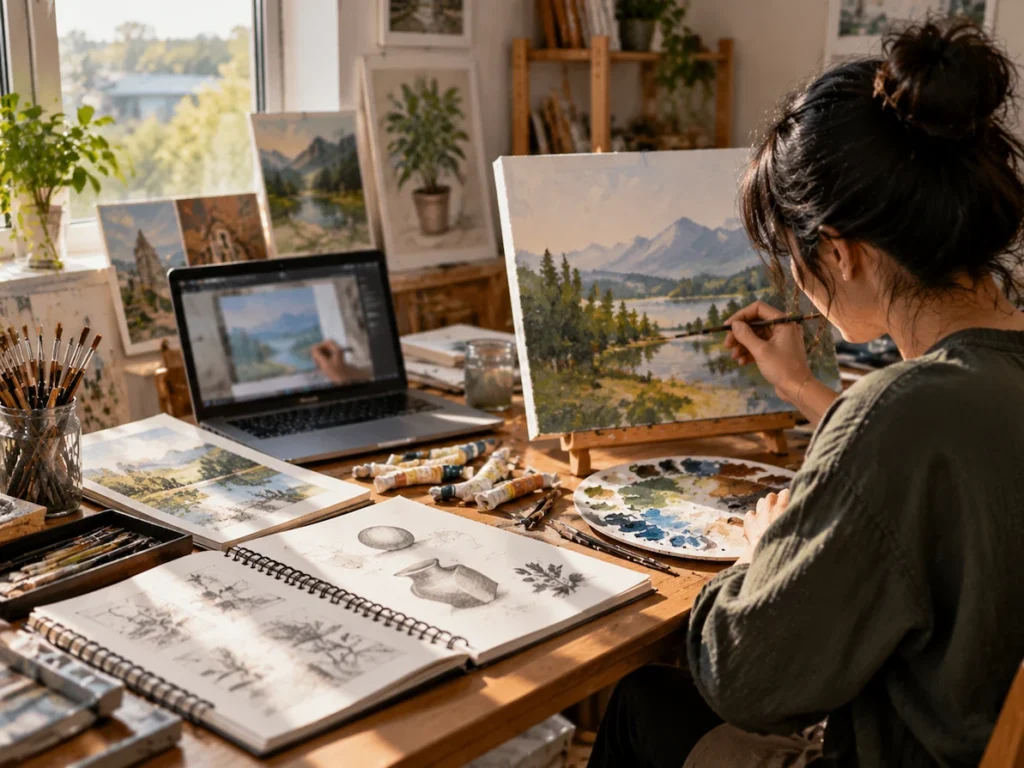
Online art learning removes the need to keep up with a fixed weekly class. Without that flexibility, students can quit within weeks when a class schedule never fits the rest of their life, and practice that moves with the week survives much longer.
Three parts of that flexibility carry most of the weight, and each one protects a different habit.
- Your Own Schedule: Complete practice sessions when your schedule allows, including evenings, lunch breaks, or weekends, while still maintaining regular progress.
- Repeatable Art Instruction: Replay demonstrations as often as needed to study each technique. This way, repeating the same brush stroke helps you practise the movement until it becomes familiar.
- A Rising Skill Level: Lessons build on techniques you’ve already practised, so each stage introduces more challenging work as your skills develop.
Consistency beats intensity in art. A flexible schedule supports that consistency by giving students more opportunities to practise throughout the week.
Why Do Students Quit Traditional Art Classes?
Students leave traditional art classes because fixed schedules, long commutes, and mismatched pacing make consistent practice unsustainable.
In many cases, talent is rarely the problem. Many of them may still be progressing creatively when practical barriers make regular attendance difficult to maintain.
The same three barriers repeatedly make it harder for students to continue, so each one deserves a closer look.
1. Long Drives to a Local Art Academy Add Up
A ninety-minute round trip makes a two-hour lesson cost half a day. In Los Angeles, traffic can make that commitment even longer.
When busy weeks make the commute difficult, students may start missing classes. Repeated absences can then make it harder to maintain a regular art practice.
An online art course removes the commute entirely. It gives students more time during the week for lessons and hands-on practice.
2. Why Do Group Drawing Classes Move at Just One Pace?
Group drawing classes move at one pace because a single teacher has to keep twenty students roughly together through the same demo.
As a result, students who already understand the technique may spend time waiting, while others may need more explanation before moving ahead. Over time, that pacing mismatch can make lessons less engaging for both groups.
Fortunately, self-paced online art lessons solve this. Students can replay each demonstration and practise the technique until they understand it before moving to the next lesson.
3. No Single Teaching Style Fits Every Student
People usually take in a single lesson in different ways. Some learn to draw by copying a master, while others want the reasoning first.
For example, a colour theory explanation may work well for one student. Another may understand the same concept more easily through a step-by-step demonstration on paper.
Good online education lets you pick the format that sticks. Then you can switch the moment a new subject calls for a different approach.
Art Courses Online vs. In-Person Classes: Comparing the Flexibility
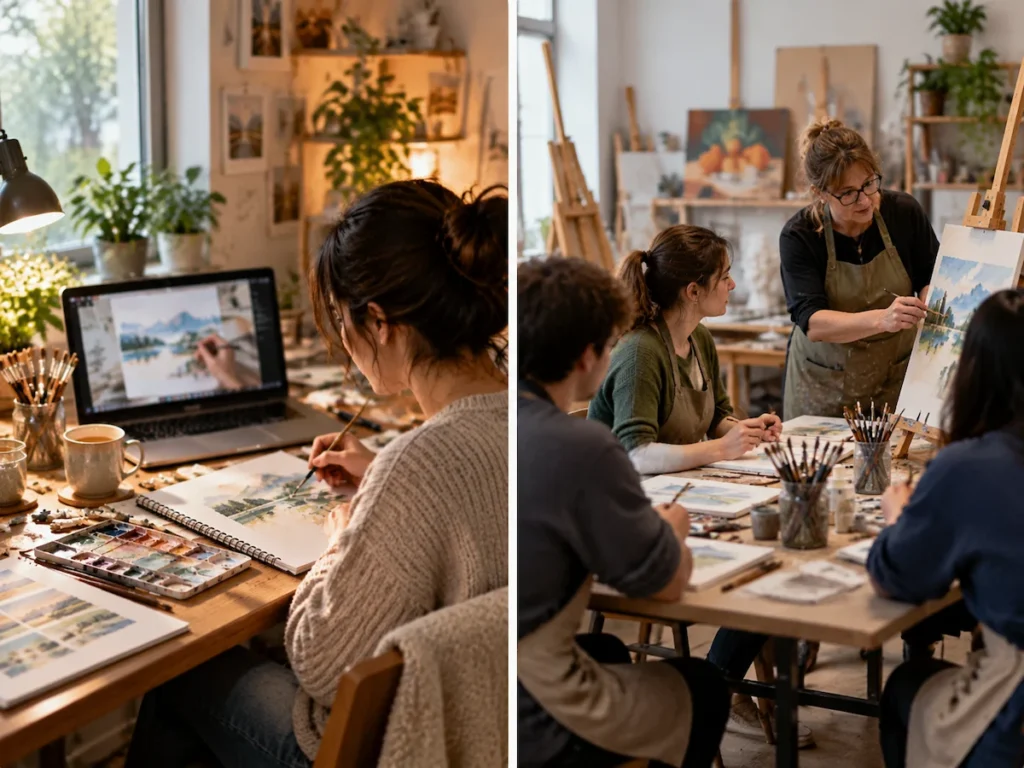
Online art courses give students more control over when and how often they practise. In-person classes provide scheduled face-to-face instruction, but students need to attend at the set time to benefit from each session.
Once you set the two methods side by side, the trade-offs get obvious quickly.
| Factor | Online | In Person |
|---|---|---|
| Schedule | Any hour, all year | One fixed weekly slot |
| Pace | Repeat lessons freely | Teacher sets one speed |
| Cost | No travel, free trial common | Tuition plus fuel |
| Feedback | Uploads and video review | Immediate, in the room |
Simply put, your calendar decides which lesson you should take more than your ambition or budget. When the week shifts often, an online art class protects the practice that a fixed timetable keeps interrupting.
Any solid online art school records everything, so the learning experience does not vanish the second a session ends.
Finding a Creative Education That Fits Your Goals
Once you see how flexibility fixes the scheduling problem, the next step is picking the right lessons.
Typically, adults who learn art online do best with a creative education built around what they want to make, rather than whatever the catalog lists first. Someone focused on portrait drawing, for instance, can prioritise lessons on proportion, facial features, shading, and expression.
Weigh these three things before you spend a dollar.
Choosing Painting Projects That Keep You Motivated
Pick projects you’d hang on a wall, because motivation comes from wanting the finished piece rather than from clearing an assignment.
Plus, someone interested in oil painting can start with techniques that directly support the kind of artwork they want to create (save that for a rainy afternoon).
Choosing a project first also gives each technique a clear purpose, since students can apply new skills directly to a piece they care about finishing.
Digital Art Education You Can Rewatch Anytime
Recorded art lessons let you pause, rewind, and watch each technique as many times as you need. You can then practise alongside the demonstration before moving ahead. If you’re anything like most beginners, the third replay is when a technique finally clicks (nobody lays a clean wash first try).
Moreover, some online art programs include live classes or instructor feedback, giving students a chance to ask questions and receive guidance on their work.
How Much Weekly Practice Do You Need?
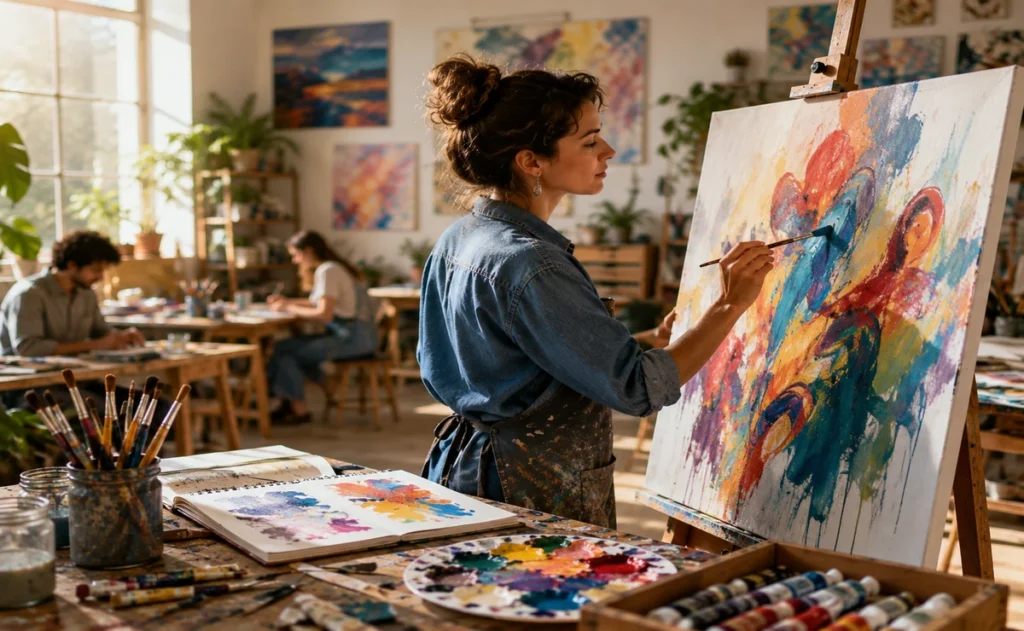
Four focused hours a week beats one marathon Saturday, because art skills build through the kind of repetition your hands remember.
You can divide that time across four sessions:
- Session 1: Practising figure drawing and basic proportions.
- Session 2: Following an online drawing lesson and repeating new techniques.
- Session 3: Applying those techniques to a personal project.
- Session 4: Finishing the piece and reviewing areas that need more practice.
Beyond that, plenty of free art tutorials exist. But a paid drawing course gives you the sequence and the correction that random videos never will.
Start Your Online Art Learning This Week
Flexibility is what keeps a creative habit alive once school, work, and family start competing for the same evening. Fortunately, the right online art classes bend around that pressure instead of adding to it.
Pick one subject, block two short sessions this week, and let the course meet you where your schedule already is. With that routine, momentum follows a start date instead of a perfect plan.
Ready to start learning? The Heart Project builds flexible art programs for students who want to keep creating. Get started with us today.
Leave a Reply