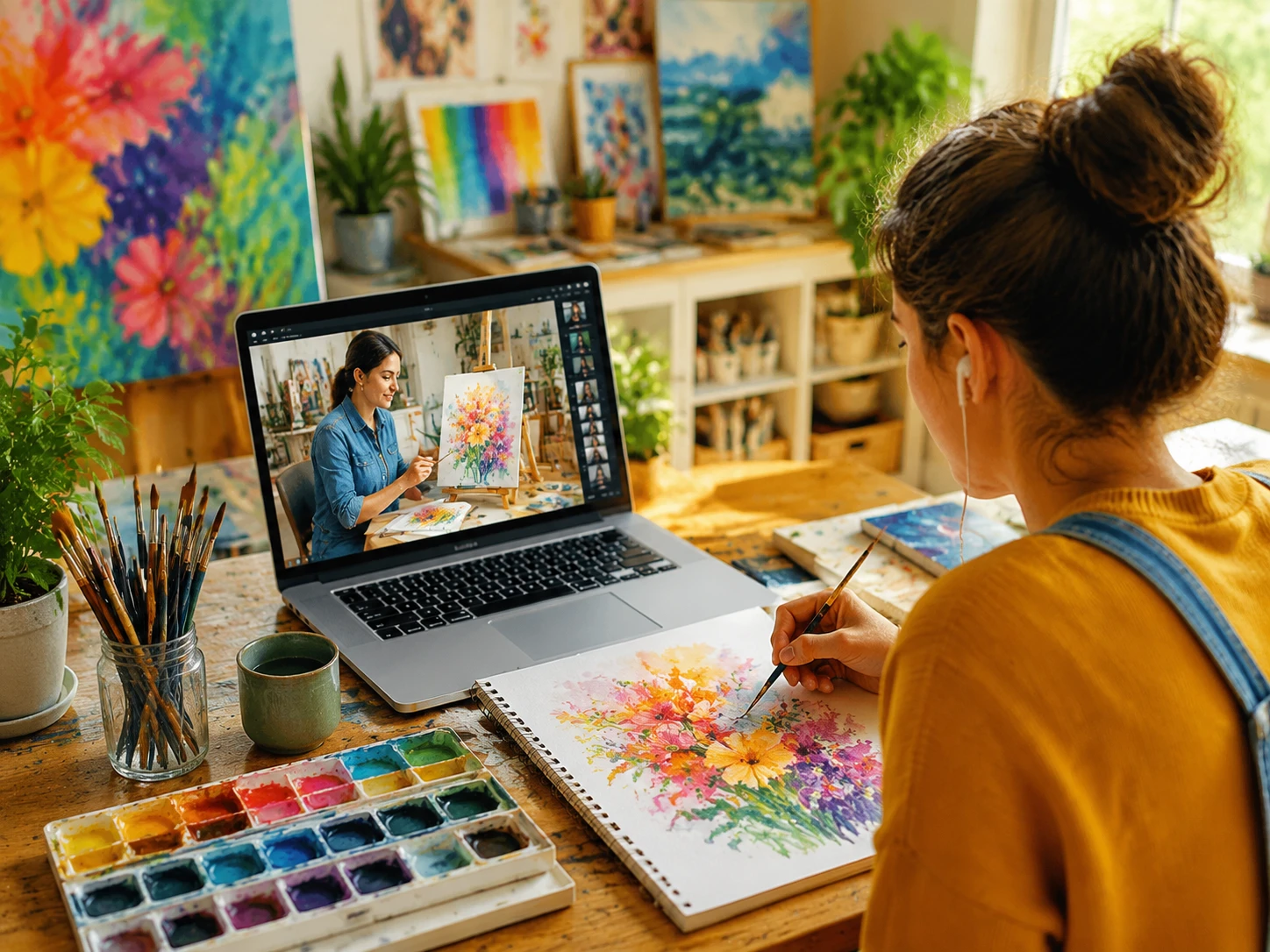
Welcome to our guide on online art education and how it has changed the way people learn to create. Over the last decade, virtual art classes have expanded into a popular path. The opportunities they create for students across the world continue to expand.
Our team at The Heart Project works with adult beginners and creatives who return to art every day. We know firsthand what it takes to build drawing and painting skills online.
This article covers how online courses work, what tools you need, and which subjects you can study. By the end, you’ll have a clear picture of what online art learning looks like today. Let’s get into it.
How Have Online Art Classes Changed Creative Learning?
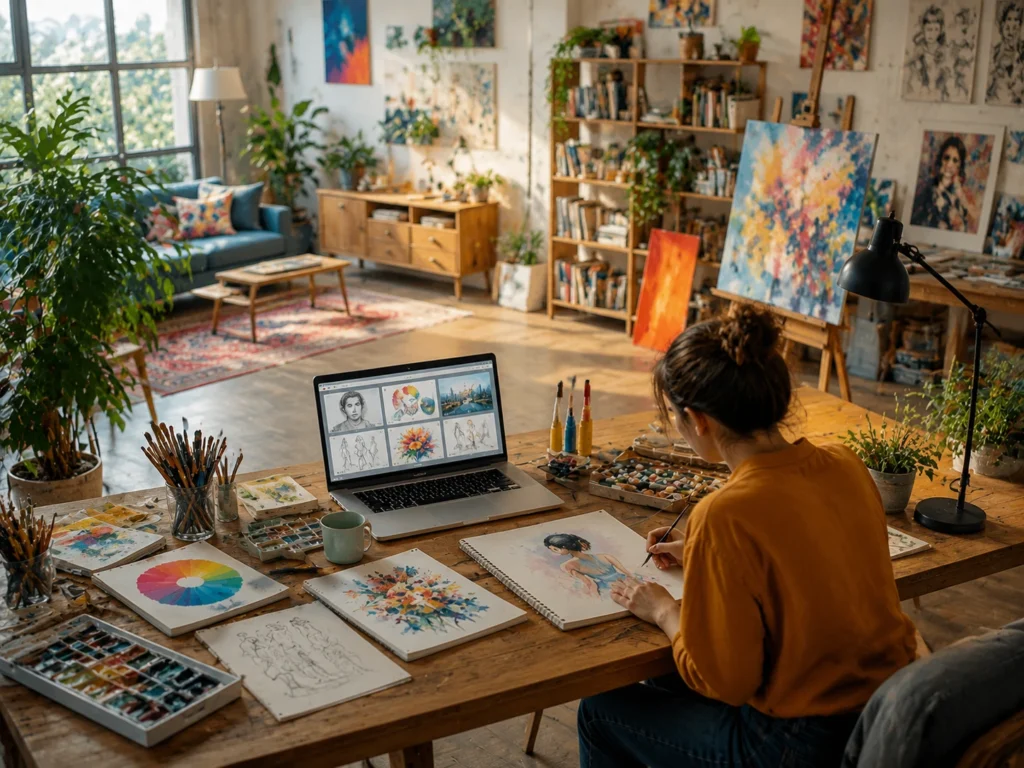
Online art classes have changed creative learning because they make structured lessons accessible from anywhere. Another reason is access to good instruction. These two main roadblocks aren’t a problem anymore. In fact, research into Americans’ online learning habits shows digital education has grown slowly across age groups. Art isn’t an exception.
For years, a skilled educator within driving distance used to be the hardest thing to find. The National Art Education Association’s guidance on online art education recognizes distance learning as an approved format for structured art instruction.
Today, video lessons and structured course modules now replace the physical classroom. The quality of instruction stays just as strong. Students no longer need to live near a major city to find experienced instructors.
How Do Online Courses Work for Art Students?
The best part of online art courses is that learners enjoy a structured experience like a physical class. At the same time, they get more flexibility. You don’t have to rearrange your entire week just to attend a lecture.
A typical course includes video lessons, tutor feedback, and self-paced practice (yes, even the dreaded feedback part). Students move through the curriculum on their own schedule and stay connected to their teacher throughout. Plus, most platforms offer both live sessions and recorded content.
These things drive how online art education works:
What Do Video Lessons Cover?
Video lessons cover structured techniques, guided practice, and real-time demonstrations with step-by-step instruction shown on screen. This means instructors guide students step-by-step through techniques like shading, color theory, and composition.
A watercolor painting lesson, for example, doesn’t just show the finished result. The instructor demonstrates brush strokes, water ratio decisions, and corrections in real time on screen.
Most lessons run anywhere from 10 to 45 minutes, which makes them easy to fit around work or family commitments. Because of this, learners can study at their own pace. On the flip side, a Saturday morning studio class can’t offer that kind of flexibility.
How Does Live Feedback Work in Virtual Classes?
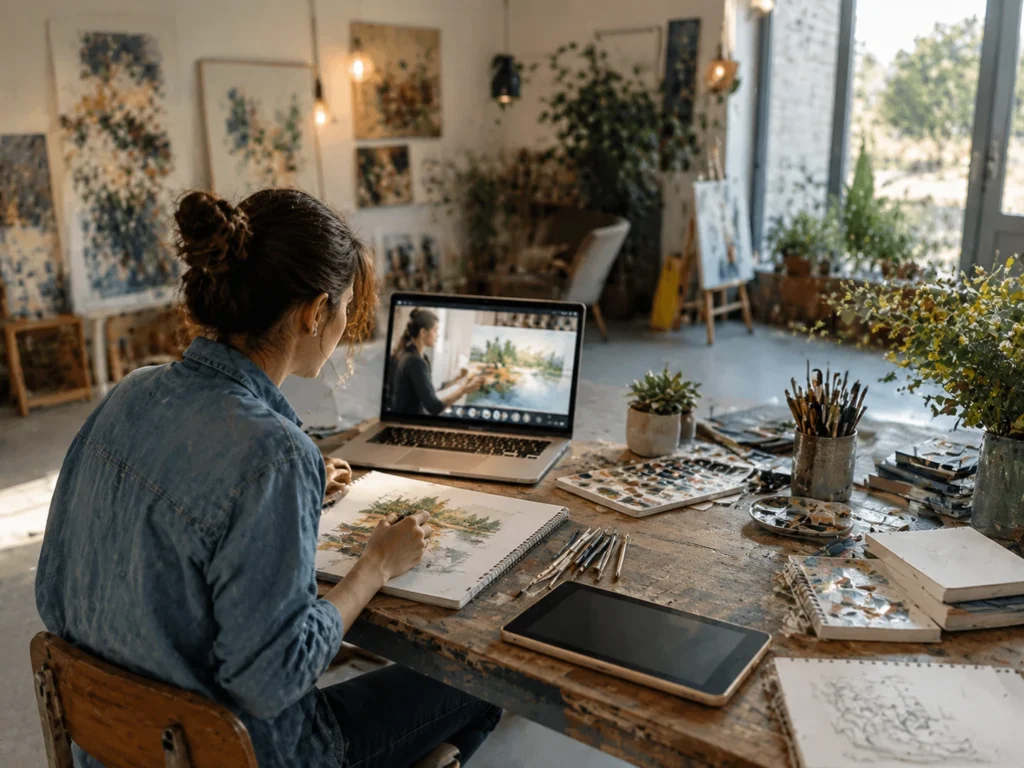
Live feedback in virtual art classes works the same way it does in a studio. Students upload their drawings or digital paintings, and instructors review them with detailed notes, often within a few days.
In many classes, feedback includes more than written notes. Instructors mark main areas on images and show corrections on screen. Some sessions include real-time question-and-answer sessions. This direct interaction helps learners spot mistakes quickly and apply changes with confidence.
Over time, regular feedback builds stronger technique, a clear sense of progress, and they don’t have to commute to get it.
How Do Online Art Courses Track Your Progress?
One thing learners appreciate about paid online courses is that their progress is saved. Every completed lesson and assignment a student submits stays on record within the course platform, often in a personal dashboard or progress tracker.
Most online art platforms give pupils complete access to their course history and results, so improvement between sessions never drops.
That kind of built-in structure keeps learners accountable. In comparison, with free content on YouTube, there’s no curriculum, no record of where you stopped, or any path forward. Paid courses solve all three.
Now, let’s look at how online art education holds up against the traditional classroom.
Can Teaching Art Online Replace the Classroom?
That’s a question many adults ask before they enroll. And the answer, for most learners, is yes.
Online teaching can replace the classroom for most art students. Location and schedule were the walls between most adults and a good art education. Online learning knocked both down.
Four things online art classes do particularly well:
- Flexible Class Schedules: Learners pick their own hours and fit lessons around work or family without added pressure. There’s no fixed start time and no waiting for others to catch up.
- Access to Global Instructors: Online art classes connect students with teachers from New York, Los Angeles, and cities across the US. That’s a pool of talent no local community studio can match.
- Affordable Art Education: A monthly fee for a full online course platform often costs less than one in-person studio session. For learners on a budget, that opportunity is hard to ignore.
- Revisit Any Lesson Anytime: Students can rewatch any video lesson until a technique clicks. In a physical class, once the instructor moves on, that moment is gone for good.
Even higher education reflects this shift. Ohio State University’s online art education program shows how collaborative art learning now happens entirely online, even at higher levels. Overall, online teaching covers every skill level, fits any schedule, and holds up for serious learners too.
What Tools Do You Need for Digital Art Learning?
Digital art learning requires a drawing tablet, a stylus, and access to a course platform. To get started, many new learners overbuy before their first lesson. But it’s better to start with the basics.
For instance, software like Procreate on iPad or Photoshop gives students the same digital painting environment that professional artists use. In general, online course platforms are browser-based, so students don’t need any additional setup to begin.
Most online art courses point beginners toward these core tools:
|
Tool |
Purpose |
Beginner-Friendly? |
|---|---|---|
|
Drawing Tablet |
Digital painting and sketching |
Yes |
|
Stylus Pen |
Precision input for digital art |
Yes |
|
Procreate (iPad) |
Digital painting and illustration |
Yes |
|
Photoshop |
Advanced digital painting and editing |
Moderate |
|
Online Course Platform |
Accessing video lessons |
Yes |
|
Reference Photo Library |
Building composition skills |
Yes |
These resources need to be on your desk on day one. Among them, Procreate costs $12.99 on iPad and gives students a professional digital painting environment (no subscription needed). From there, learners build their tools as their skills develop.
Once that’s established, the next question most students ask is what they can study.
What Subjects Can You Study in Online Art Courses?
Online art courses cover drawing basics, color theory, digital painting, and mixed media. Students can also study figure drawing, portraiture, and illustration. Those subjects are now available outside traditional art school walls.
So what does that look like in practice? A student in Ohio can take a character design course from a professional who worked on animated films.
Now we will explore courses that cover a wide range of topics and groups with specific learners in mind:
Online Art Courses
Online art courses welcome anyone who wants to learn art on their own terms. In fact, adults who return to art after years away find virtual classes less difficult than traditional studio settings. You don’t need a fancy setup or a design degree either (a device and a stable internet connection are all it takes).
A student can explore watercolor painting or build a drawing practice from scratch. There’s a course for both. Two groups, though, get the most out of online art classes:
Adults Who Return to Creative Education
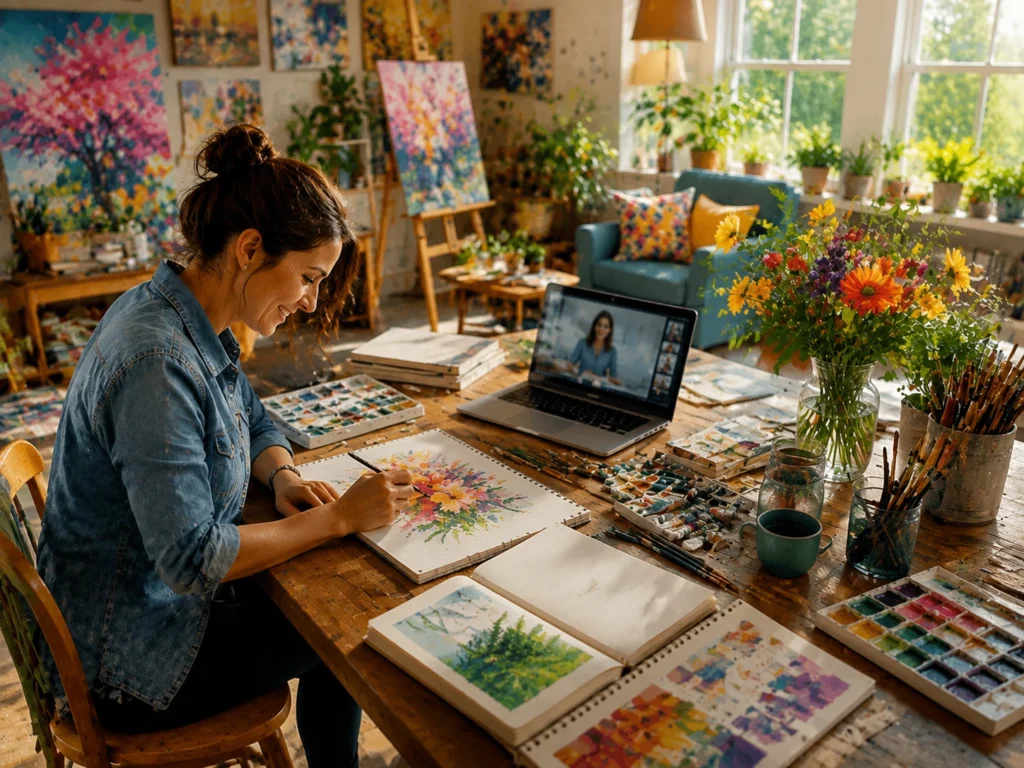
Many adults put art aside after school and now want a low-pressure way to begin again. Life gets busy, creativity fades, and before long, years pass.
Online art classes remove the discomfort of a physical classroom. Adults progress at their own pace in a group class. This flexibility changes how adults experience learning art.
We see this constantly at The Heart Project. Those who haven’t touched a sketchbook in twenty years join a beginner drawing course and surprise themselves with benefits and changes within weeks. For many, online art education is what finally gets their artistic journey started.
Beginners With No Prior Art Background
Zero experience is no barrier in online art education. Most courses start from foundational basics: pencil grip, line confidence, and paper control. Pupils build those skills before they ever touch color or digital painting tools.
A typical beginner course moves through these steps first:
- Pencil Grip and Pressure Control: Proper grip and steady pressure create clean, controlled lines from the start.
- Basic Line Work and Drawing: Students practice simple lines and figures to build accuracy and control.
- Light and Shadow Fundamentals: Light and shadow define form and add depth to each drawing.
- Color Theory Introduction: Basic color rules guide better choices and improve visual balance.
Structured online courses give beginners a defined progression. Students always know what to learn next, what resources to use, and where their skills go from there. That kind of clarity is hard to find with free tutorials.
Ready to Pick Up the Pencil Again?
Online art education has opened doors for how people start and continue creative work. Today, anyone can learn to draw or paint from home with access to expert instruction. At The Heart Project, we run structured online sessions, provide feedback, and guide beginners through each stage of learning.
Our team built these online courses around three things:
- Structured Teaching and Measurable Progress: Every course builds your drawing and painting knowledge step by step, from the absolute basics up.
- A Community That Supports You: Students share ideas, find inspiration, and connect with others at different skill levels.
- Flexible Workshops and Resources: Complete access to structured workshops, video resources, and self-paced courses comes standard with each plan.
If you’re ready to start learning, browse our online art courses and find the one that fits your goals.
Leave a Reply