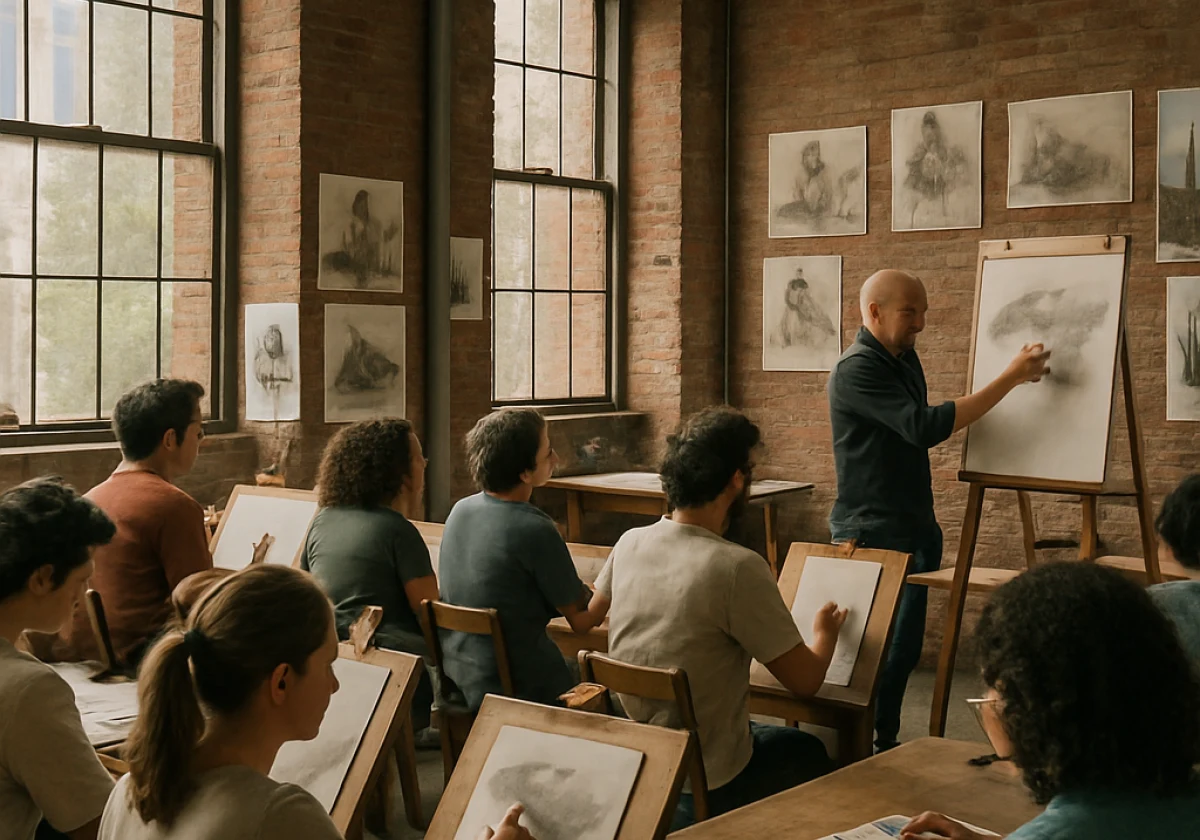
Learning to draw and paint starts with five fundamentals: line, shape, value, color mixing, and composition. These artistic skills carry into every medium you’ll use, from a charcoal sketch to a stretched canvas.
Most people skip past them because basics feel slow next to a finished picture. However, we’ve seen the difference they make at The Heart Project. Beginners gain confidence when they understand how to control their lines, mix colors, and arrange objects within a composition.
This guide covers those core skills, where to find classes around San Francisco, and how to choose between studying online or in a studio. Let’s get started.
Beginner Art Skills: The Drawing Fundamentals Taught in Class
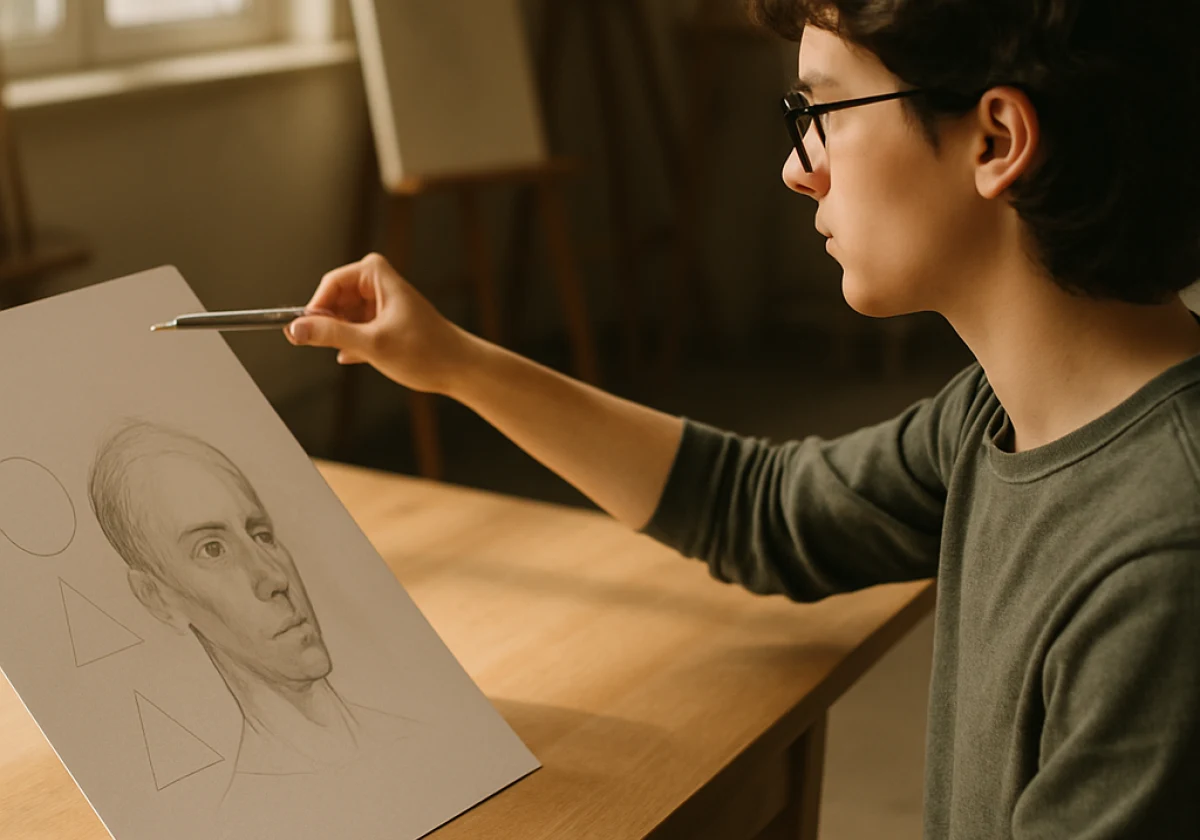
New artists often skip straight to color and wonder why their paintings never look right. Drawing is usually where the trouble starts. Weak shapes and flat values show through every layer of paint you put on top.
Three beginner art skills help you draw accurate shapes, show depth, and capture movement. They build on each other in order.
Line, Shape, and Proportion Basics
Line work comes first. Every subject you draw breaks down into circles, boxes, and triangles before it ever becomes a face or a chair.
Once you’ve sketched those basic shapes, the next step is getting their proportions right. Hold your pencil at arm’s length, close one eye, and use your thumb to mark the width of your subject. Then compare that measurement with its height to check if your drawing matches (the trick many students resist for a good three weeks).
If you ask us, 20 minutes of measured drawing beats two hours of guessing at shapes. Practising measurement gives you a reference to check against. That way, you can spot an oversized head or a narrow shoulder before repeating the same mistake.
Seeing Value, Light, and Shadow
Value means how light or dark something looks in a drawing. Artists also call this tone, as explained in Tate’s art glossary. Changes between light and dark areas help show an object’s curves and edges, and make a flat drawing appear three-dimensional.
In this case, we teach squinting at your subject until the small details drop away. You’ll start to see just three or four main tones: the lightest areas, the darkest shadows, and the shades between them.
Start by drawing those larger areas of light and dark before adding smaller details. That habit separates a flat sketch from one with dimension because the contrast helps viewers understand where the light falls and how the object curves.
Why Figure Drawing Builds New Skills Fast
When you can judge shapes, proportions, and values, figure drawing puts all three skills to the test. In a timed drawing session, a live model holds a pose for just two minutes before moving into the next one.
That pressure pushes you to catch the gesture instead of fussing over eyelashes. Having taught these sessions for years, we’ve watched beginners make noticeable progress in a month of life drawing, particularly with proportion and movement.
Plus, the human body punishes sloppy proportion. An arm that’s too long or a head that’s too small becomes obvious when you compare the body parts. That gives you a clear problem to correct in your next sketch.
Painting Lessons: Color Mixing, Brushwork, and Composition
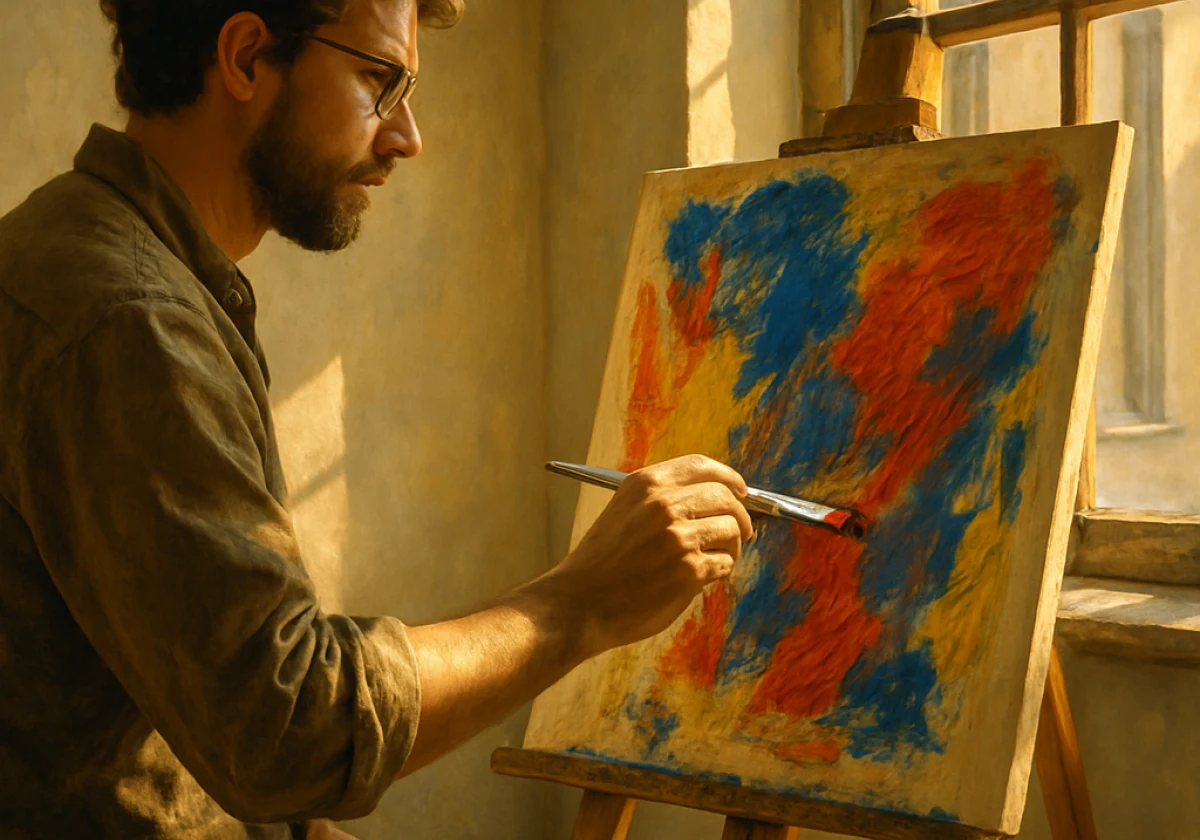
Learning a few painting basics early can save you months of frustration at the easel. Intuitive painting has its place, but beginners benefit from understanding how paint behaves first. Unlike pencil, paint can mix with the colors already on your canvas and leave your work muddy if you don’t control it.
Four fundamentals cover most of what beginner painting lessons teach in the first term:
Color mixing: Mixing two primary colors produces a secondary color. On the other hand, adding too many pigments can dull the result. That’s why a limited palette helps you learn which combinations produce the colors you want.
Brush control: Load the brush halfway, then vary pressure and stroke direction. Lighter pressure creates thinner marks, while firmer strokes spread more paint across the canvas. This way, you can create a wider range of textures with acrylic painting.
Composition: Place your focal point off center, roughly a third of the way in, so the eye lands somewhere you chose on purpose. This technique follows the rule of thirds, a simple way to arrange the main elements of your painting.
Layering: Thin washes usually go down first, with thicker marks added once the earlier layers are ready. Applying fresh paint over a wet layer can mix the colors unintentionally, while thick acrylic layers may need longer to dry fully.
Our verdict after years of beginner terms: mixing and layering reward patience far more than talent. Once you can mix the colors you need and let each layer dry properly, you’ll spend less time correcting muddy patches and more time developing your painting techniques.
Where Can Beginners Find Drawing Classes in the Bay Area?
With the fundamentals sorted, the next question is where to practice them. Beginners looking for drawing and painting classes in the Bay Area have three main options: community art courses, private art schools, and formal degree programs. Each offers a different level of instruction, time commitment, and cost.
What San Francisco Art Courses Cover for Beginners
San Francisco art courses for beginners usually cover charcoal, watercolor, acrylic, and oil painting. Some also offer pottery classes. Subjects rotate, so portraits, landscapes, and still life each get their own lessons.
Courses often run for six to eight weeks. That gives you enough time to practice without committing to a full semester.
What’s more, smaller classes give instructors time to correct your grip and offer personal feedback. The range of mediums also leaves room for creativity and imagination (the part beginners tell us they enjoy the most).
There’s another benefit to making art. A Drexel University study found that cortisol levels (a stress hormone) dropped in 75% of adults after 45 minutes of art-making, suggesting it may help reduce stress.
Inside the Art School of SF Bay Approach
The Art School of SF Bay moves students through drawing before paint ever touches canvas, which keeps your progress visible week to week.
Their summer camps and teen programs follow the same order. We’ve sent nervous beginners there when they needed a steadier learning environment than drop-in sessions give.
Personally, we’d call it the safest first stop on a creative journey, and parents we know highly recommend it.
Academy of Art and Other Formal Programs
Formal tracks like the Academy of Art and other art institute programs aim at portfolios, degrees, and careers in fine art or illustration.
They require a greater investment of time and money, so this route makes sense once you’re serious about studying art long-term.
For now, a community art class or short course lets you practise the same fundamentals without committing to a degree.
Learning Art Online or In a Studio: Which Fits Your Week?
Once that’s established, the next choice is between online classes and studio sessions. Your schedule and your need for correction settle it (the schedule usually wins out).
Compare the three formats side by side before you book anything.
| Option | Best for | Typical cost | Feedback |
|---|---|---|---|
| Online classes | Flexible schedules, self-paced practice | Low to mid | Delayed or recorded |
| In-person classes | Hands-on correction, live models | Mid to high | Immediate from instructor |
| Open studio | Practice time with a group of artists | Low | Peer-based |
The biggest difference between online and in-person art classes is how quickly you get feedback. Learning art online suits new techniques you can practice on your own time. Meanwhile, an instructor in the room can spot mistakes in your grip, proportions, or brushwork as you work.
So start with in-person classes while you develop those skills, then add online classes once you can recognize and correct your own errors. If you want extra practice between lessons, an open studio session will give you space to work independently alongside other artists, often at a lower cost than a taught class.
Ready to Grow as an Artist? Every Beginner Is Welcome
Line, shape, value, color mixing, and composition form the foundation of every artist’s progress. Build these skills early, and everything you attempt afterwards will become easier.
And you don’t need any experience to begin. Pick one class and keep showing up, because regular practice builds confidence and improves your technique over time.
At The Heart Project, we welcome artists of all ages and skill levels to our drawing and painting classes across the Bay Area. Contact us to find a session that fits your schedule and take your first step.
Leave a Reply