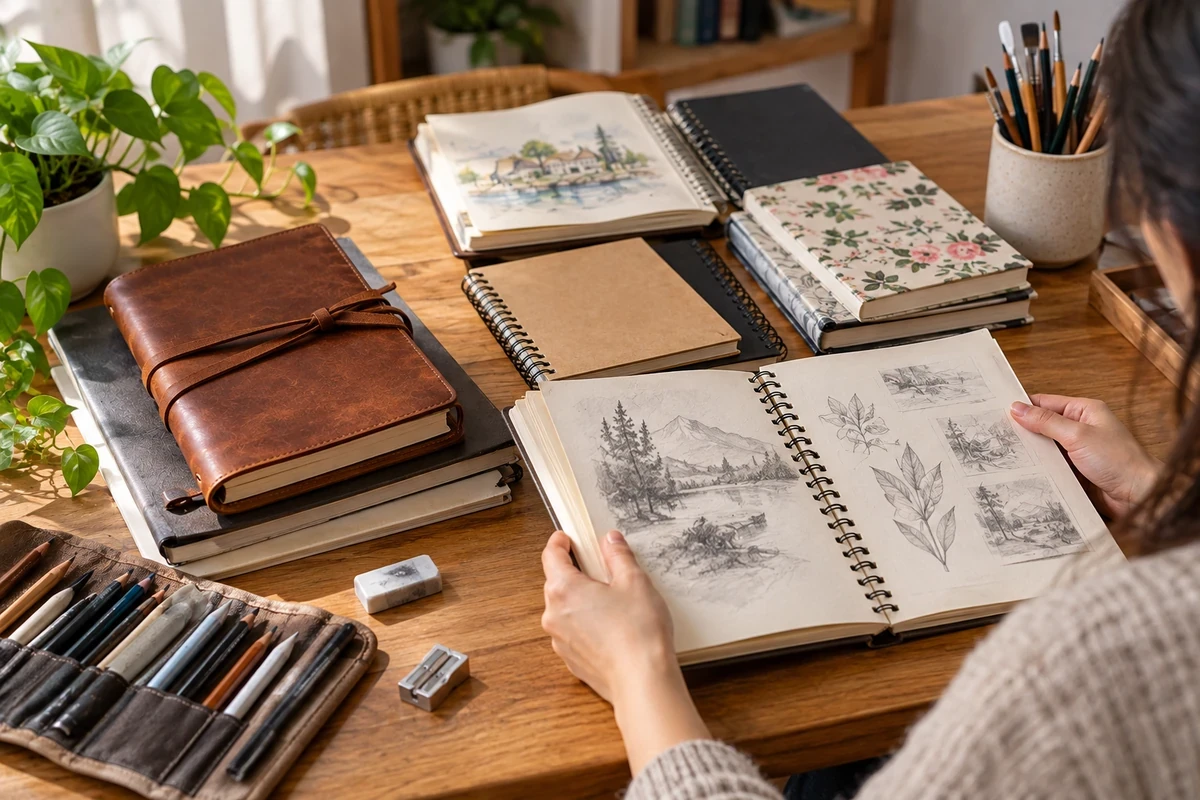
That wonky-armed figure drawing you want to throw away? Photograph it first. Artists judge a page by the end result, so the awkward ones go straight in the trash. But keeping your bad sketches is how you build an art progress archive, a dated collection that shows exactly how your skills have changed.
At The Heart Project, we’ve met plenty of artists who tossed months of evidence because one page looked embarrassing. So in this article, we’ll cover:
- How you can decide which pieces to save
- Ways to name and date them
- How to build an art progress journal out of the sketches you almost threw away
Those crooked hands and lopsided faces hold the clearest record of how your drawing changed this year. Pull out the sketchbook you’ve been avoiding, and let’s start filing.
Starting an Art Progress Journal You’ll Keep Using
Most artists delete their throwaway sketches long before the improvement hiding inside them shows up. An archive fixes that by keeping every attempt in one dated place, in the order you drew it. Three small habits decide whether it survives past the first month, so start with the book itself.
Choosing a Sketchbook That Makes Sketchbook Progress Visible
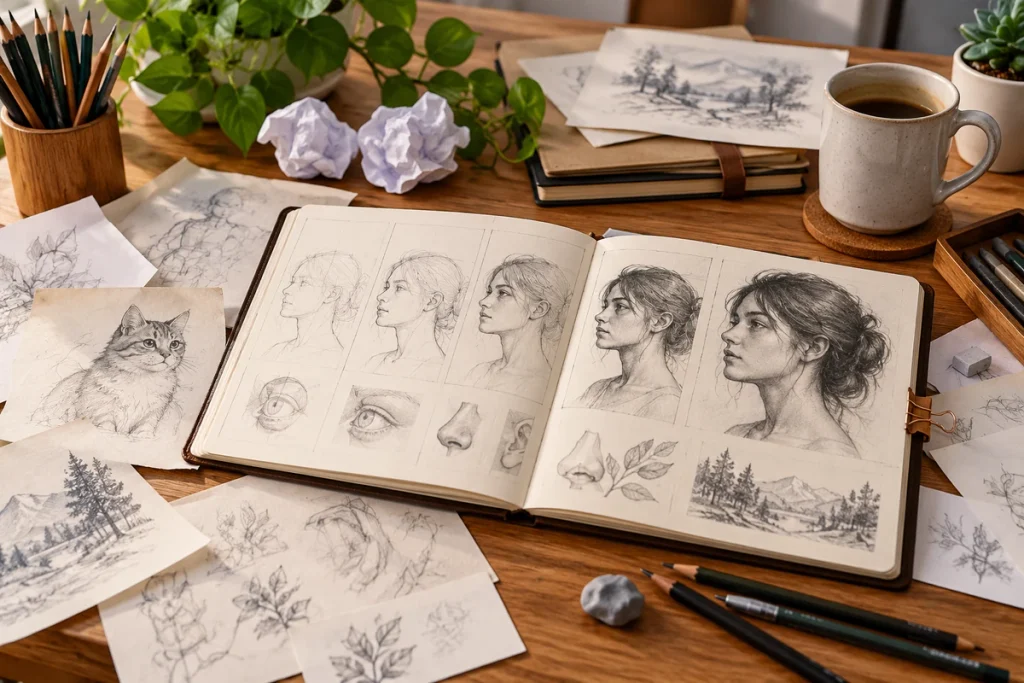
Pick a sketchbook you’re willing to ruin. A 40-dollar leather cover makes every blank page feel expensive, and expensive pages stay blank. Handmade journals and visual journals cause the same problem, since polish is what stops beginners from scribbling.
But are inexpensive journals good enough? Don’t worry. Cheap composition notebooks absorb graphite and ink just as well, and they cost about two dollars at any drugstore (ours live next to the coffee maker).
One exception: If you work in mixed media art, buy paper at 98 lb or heavier. That way, wet washes don’t buckle the page.
Saving Sketches Instead of Tossing Them
Date every page the moment you start it, especially the ones you hate. An undated sketch tells you nothing six months later. We’ve taught this rule to beginner groups since 2016, and the other rule that sticks is blunt: nobody tears a page out of the book. You can set that rule for yourself too.
Photograph each finished page under the same window light, then drop the files into one folder named by month (phone cameras beat scanners here). That’s it. The journaling process ends there, and your archive now lives in two places at once.
What Growth Really Looks Like After 30 Days
After thirty days, growth shows up as speed and steadier lines, rather than a stack of finished art. Most pages will still look rough. But you’ll stop redrawing the same contour four times, and shapes will land closer on the first pass.
Not to mention, habits take a while to settle, and thirty days is only the start. Researchers at University College London found a median of 66 days before a new daily habit felt automatic, with a wide spread between people.
That means progress is more important than reaching an exact deadline. And when you look back at your progress from day one to day thirty, it can show the improvement you’ve made and encourage you to keep going.
Art Materials: The Simple Supply List for a Progress Journal
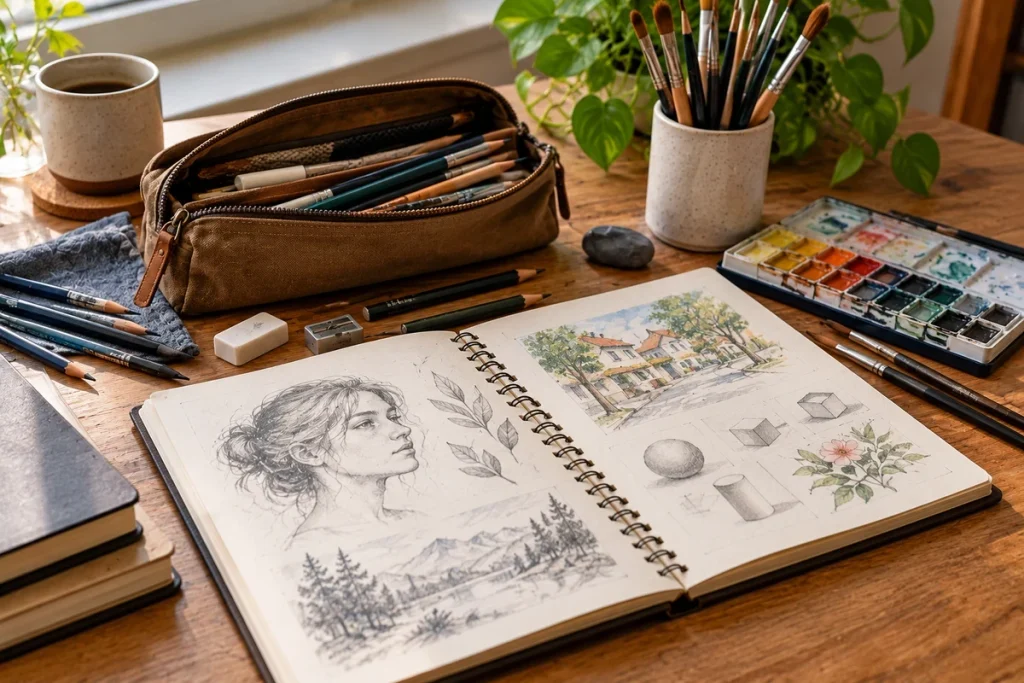
The right materials cost less than a sketchbook app subscription, and they last for years. You probably own most of this list already, and the rest fits inside one pencil pouch. Work through these five items, and skip everything else until the habit holds for a month:
Two Pencils: Start with a simple pair that covers most sketching needs. An HB pencil works well for light outlines and early planning, while a 4B pencil creates darker shadows and stronger contrast. They handle most everyday sketchbook work without needing a large pencil collection.
Fineliner Pen: A fineliner adds permanent lines you can’t easily erase, which encourages you to commit to your choices. Keeping those first marks visible also helps you compare your progress and see how your drawing style develops over time.
Pocket Sketchbook: A small sketchbook makes regular practice easier because you can carry it wherever you go. A book that fits in a jacket pocket or bag is more likely to be used during spare moments, such as while waiting for transport or during breaks.
Phone and Folder: Use your phone to photograph your artwork and keep the images organised in one folder. Taking photos under similar lighting conditions helps you compare work more accurately and track changes in your skills over months.
One Date Stamp: A simple date stamp makes recording your practice easier. Adding the date quickly removes the small barrier of writing it by hand and helps you build a clear timeline of your creative progress.
Before you add to cart, check the drawer by the front door. Half of this list probably already hides in your office supplies. New materials and techniques can wait until the pages pile up.
How Does a Journaling Habit Track Drawing Progress?
A journaling habit tracks drawing progress by giving you dated pages to compare over time. Each entry shows what you could draw at that point, which makes changes in your technique easier to see.
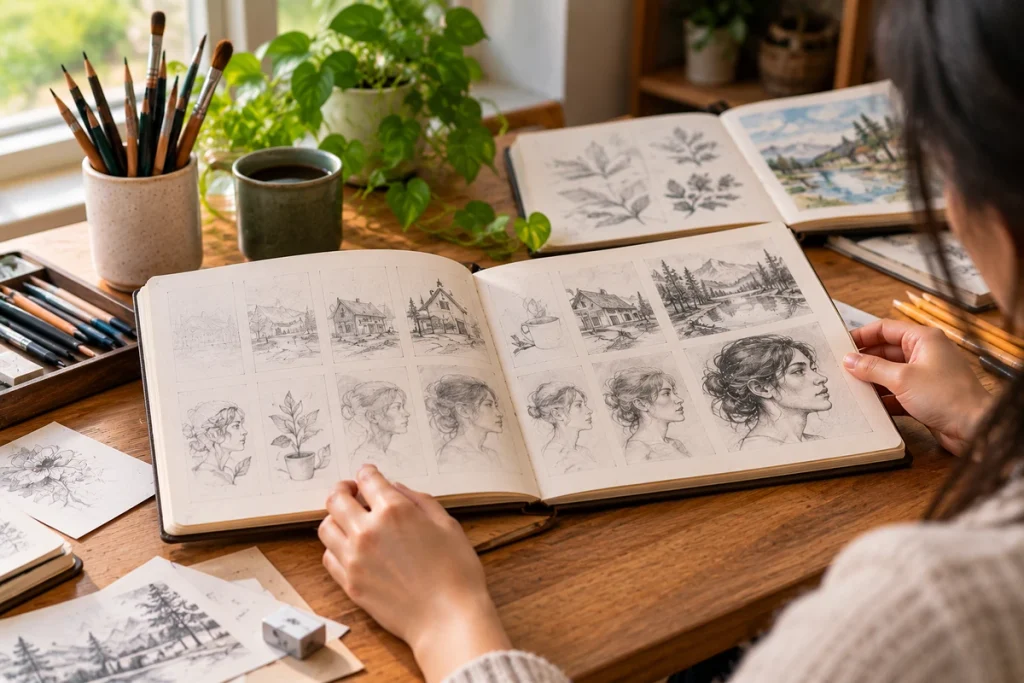
Day forty can feel like day ten while you’re practising every day, because small improvements are hard to notice in the moment. Your art journal gives you proof through side-by-side comparisons, such as two hand studies drawn weeks apart or the same pose repeated with better proportions.
Add one short note under each sketch about what you practised or struggled with. Those notes help you identify patterns, like repeating the same mistake with perspective or improving control over line weight.
You don’t need hours of practice for this to work. A consistent twenty-minute session creates a record you can review later and shows where your skills have improved.
Over time, your journal becomes a visual timeline of your learning, with every page showing a step in your development.
Sketchbook Journals and Popular Posts Reveal Progress in Different Ways
A sketchbook journal and a popular post measure different parts of your art progress. Your journal records every attempt, while online posts usually show only finished work that you choose to share.
Drawing for yourself and drawing for an audience serve different purposes, after all. So compare them across four areas before deciding how each one fits your practice.
| What you’re measuring | Sketchbook journals | Popular posts online |
|---|---|---|
| Timeline | Every dated page, including mistakes and unfinished work | Only selected pieces you decide to publish |
| Feedback | Personal notes that help you review your progress later | Likes, comments, and reactions from viewers |
| Skill progress | Shows changes in line control, speed, proportions, and repeated mistakes | Shows which finished pieces attract attention |
| Honesty | Keeps the full record of your learning process | Usually presents your strongest work |
Use both, but let your sketchbook remain the main record of improvement. A post can show what people liked, while your journal shows how your skills changed to get there.
Give Your Art Practice Journal a Reason to Grow
Bad sketches are data. The pile of them is the only honest record of how far your drawing has come, and keeping it costs nothing beyond shelf space and a little stubbornness.
Start with one dated page tonight, then photograph it before you close the book. After a month of regular entries, you’ll have a clear record to compare.
If you want to build that habit with guidance and feedback, The Heart Project pairs working artists with young people who want a place to make art. Contact the team to join a workshop and keep those pages filling up.
Leave a Reply