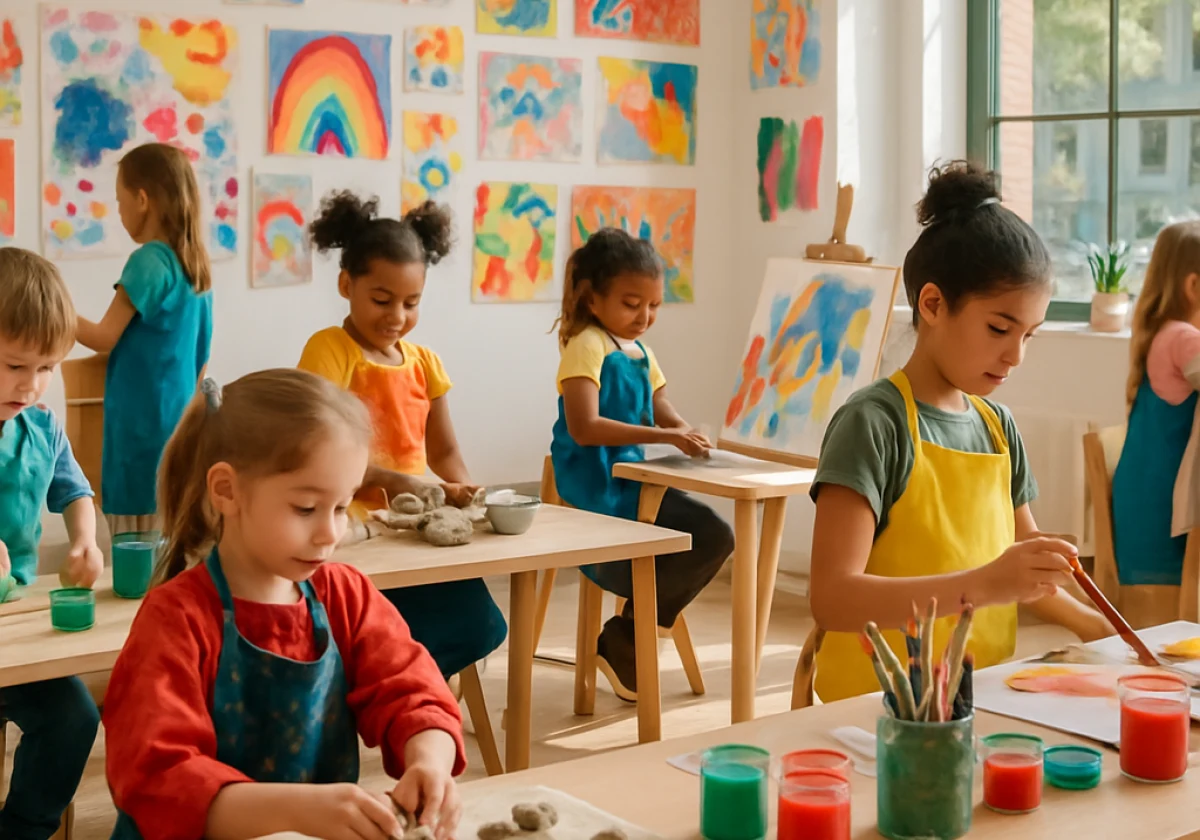
Art classes for children build creative thinking through open-ended projects, new materials, and the freedom to solve problems their own way. A blank sheet of paper becomes a choice about color and shape, instead of an assignment to copy.
Most school activities ask kids to find one correct answer, check it, and move to the next worksheet. The Heart Project runs art classes that work the other way. Children test ideas, change course, and keep building when a first attempt flops.
This guide covers how studio time grows creative thinking, which art programs suit each age, and how the habit continues at home.
Why Do Art Classes for Children Build Creative Thinking?
Art classes for children build creative thinking because open-ended projects ask kids to make choices. There’s no single right answer to copy, so every call about color, size, and material belongs to the child. And that ownership is where original thinking starts.
Three habits develop in a typical class, each one building on the last.
Open-Ended Art Projects Teach Problem Solving
A strong project starts with a question rather than a sample to copy. The question gives children room to decide how to approach the task.
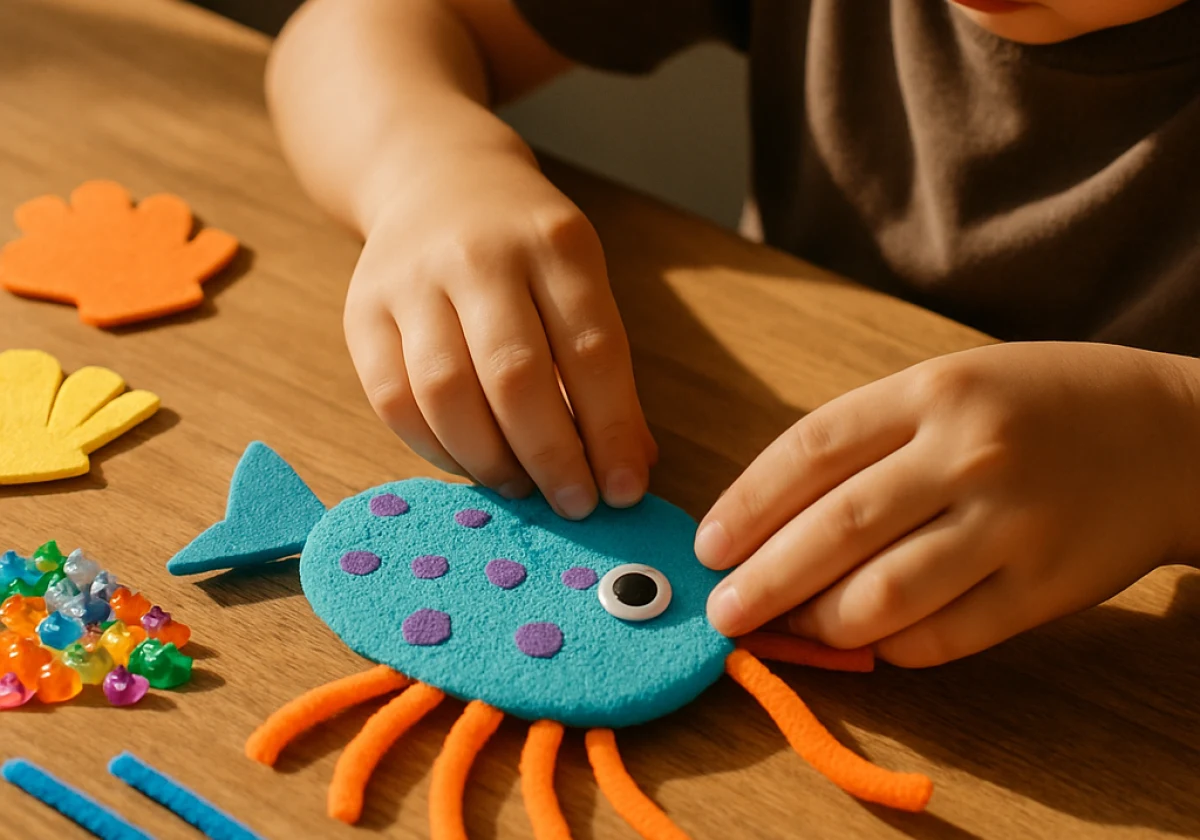
You can try this approach with a group of seven-year-olds. Ask them to use cardboard, paper, pipe cleaners, and paint to build a creature that lives underwater and watch what happens. You’ll see every child picks materials, tests what holds, and rebuilds the fins that keep sliding off the body. That rebuilding is the problem-solving.
Our teaching artists hold back answers on purpose (we reply with questions instead). A kid who untangles her own design problem remembers the fix.
How Drawing and Painting Classes Stretch Young Imaginations
Drawing and painting classes push kids to picture something before it exists. Then they hunt for the marks and colors that carry it. In practice, that might mean mixing paint to match the grey of a storm cloud or inventing a city no map has ever shown.
Different art materials also change how kids express those ideas. For example, watercolour runs and blends, charcoal leaves soft smudges, and acrylics build thicker layers. Trying each one helps kids see what works best for the picture they have in mind.
Once they know what each material can do, simple art techniques help them use those effects with more control.
Mistakes Become Part of the Creative Process
Believe it or not, mistakes turn into material inside a studio. A spilled blot of ink can become a bird, a lake, or the start of a better plan. And kids who learn that early stop erasing everything and start adapting. That flexible thinking is the same skill they will need for science projects and group work.
One of our parents told us her daughter quit crumpling drawings after six weeks of class (that shift shows up at home fast). Kids art classes give a mistake somewhere useful to go.
Inside the Art Studio: How Kids Learn Through Hands-On Art
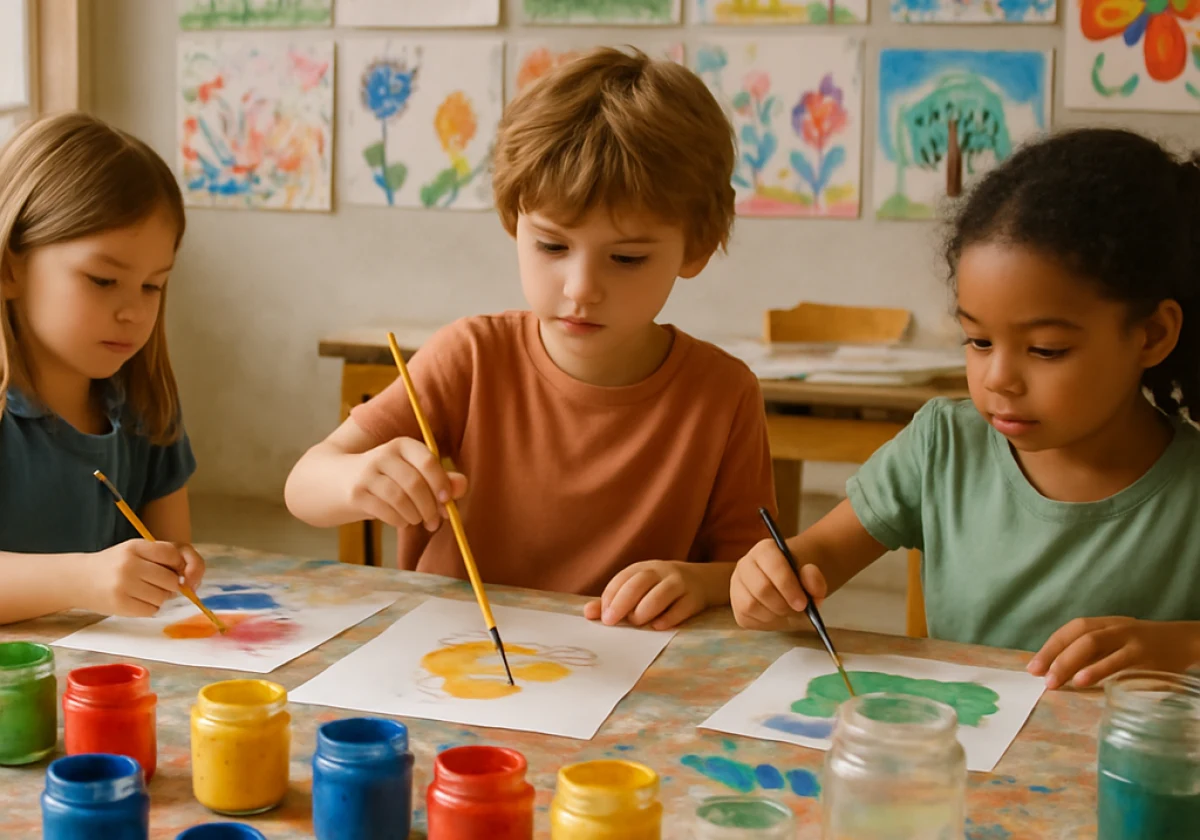
Walk into a kids’ art studio on a Saturday, and you’ll hear more questions than instructions. Those questions come from hands-on art, where handling the material teaches more than a demonstration ever could.
Four parts of the room do most of the teaching, whatever sits on the table that week.
- Hands-on Materials: Paint, clay, and collage supplies invite experimenting instead of copying a finished sample. A child can mix two colours, reshape a piece of clay, or layer scraps until an idea starts to come together.
- Guided Freedom: Art teachers set one theme, then let each child take it somewhere personal. If the class draws animals, one child might sketch a family pet while another invents a creature with wings and six legs.
- Shared Ideas: Working beside other students shows kids that many answers fit the same creative challenge. They see how someone else uses colour, texture, or an unusual material and may try a new approach in their own work.
- Celebrating Effort: Hanging children’s art on the studio wall shows kids their effort deserves attention. Seeing their work displayed beside their classmates’ pieces can give them the confidence to try a harder technique or a bolder idea next class.
Art instruction lands best in a small group, where a teacher can watch each pair of hands and step in once. Kids still make their own choices, but they have someone nearby to show them a technique when an idea gets difficult to create.
Simply put, the studio does half the teaching. Give kids good supplies, a loose brief, and an audience, and creativity takes care of itself. Fun is the engine here, and nobody has to fake it.
Comparing Art Lessons, Workshops for Kids, and Summer Camps by Age
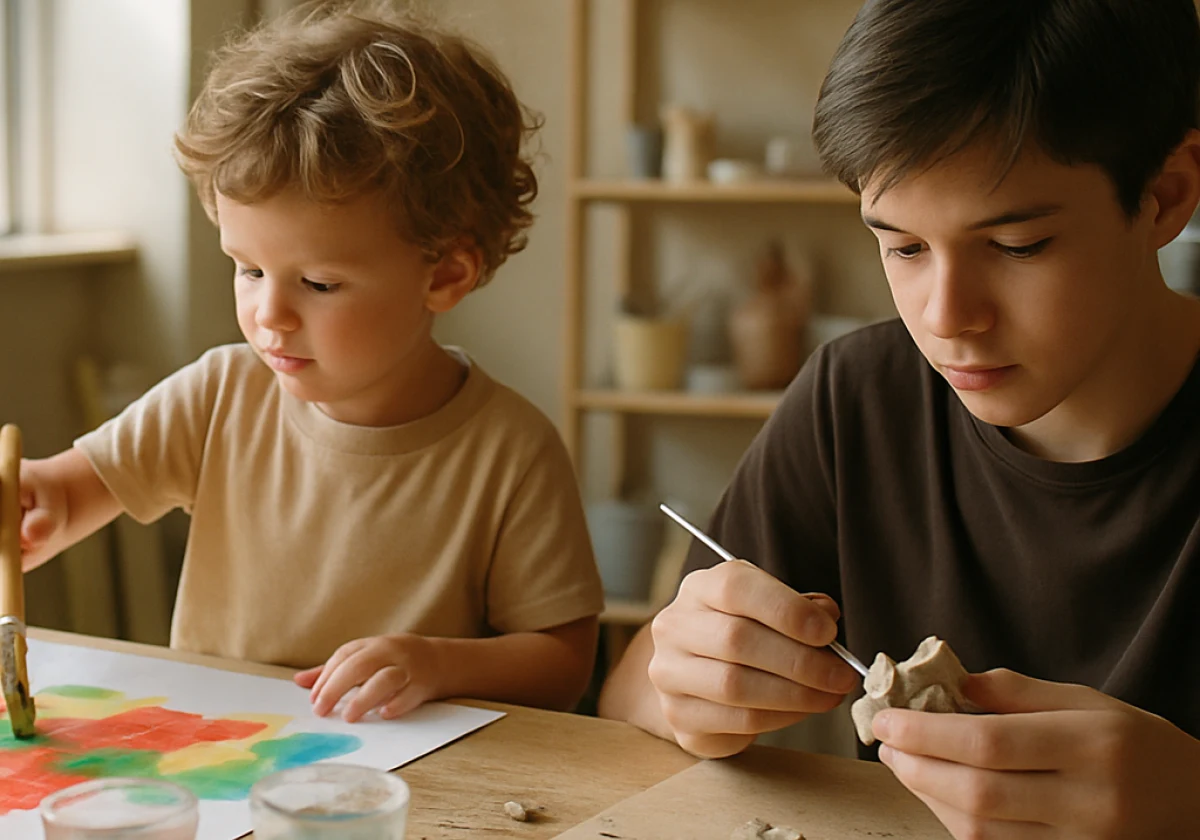
Moving to the practical side, matching classes to your child’s age keeps studio time fun instead of frustrating. A four-year-old needs big tools and short projects while a twelve-year-old wants finer technique.
Use the table below to find the format that fits your family calendar.
| Program | Ages | Creative focus |
|---|---|---|
| Weekly Kids Classes | 5 to 12 | Steady skill building in drawing, painting, and clay |
| Workshops and Birthday Parties | 4 and up | One-time art projects that spark fresh ideas |
| Summer Camps | 6 to 14 | Multi-day themes with room to experiment |
Good art classes for kids scale the brief to the age, not the other way around. Group classes for children also run on a shorter clock than most parents expect, since younger kids hit their limit near the 45-minute mark while teens will work for two hours straight.
Our rule of thumb: Book weekly classes for steady growth, then add workshops, birthday parties, and special events around school breaks. Art camps suit tweens and teens, who usually stay hooked longer when a summer camp follows the school year.
For kids who show less interest in drawing or painting, mixed arts classes can bring music or drama into the experience and give them another way to create.
Creative Learning Does Not Stop When Class Ends
Once a class wraps up, creative learning continues wherever kids have paper, paint, or clay within reach. A delivery box, a tray of watercolors by the window, and twenty unscheduled minutes beat most planned activities. You do not need an art room at home. A surface nobody minds getting messy will do.
The thinking carries into schoolwork too. A kid who sketches 12 versions of a dragon will happily draft three versions of an essay. There’s research behind this link as well.
Researchers Daniel Bowen and Brian Kisida tracked about 10,000 Houston students through the Houston Arts Access Initiative in 2019. Their study found extra arts learning improved writing scores, cut disciplinary problems, and raised students’ compassion for other people.
Parents in our Los Angeles art programs often notice kids talking more about their creative choices. At dinner, a child might explain why she chose one colour over another (and those explanations can get long). Moments like these show kids learning to put their ideas into words.
To keep the habit going, rotate supplies instead of buying more. Ask about choices rather than praising neat edges. With this kind of encouragement, regular opportunities to draw, paint, build, and experiment can support kids’ art education at home.
Our studio also sends families home with a project prompt after seasonal events, and free community events at local libraries and museums fill the gaps between sessions. Family events on weekends work the same way. Small, regular making beats one big art experience every time.
Ready to Watch Your Child’s Creativity Grow?
Art classes give children room to make choices, repair their own mistakes, and keep ideas coming long after the paint dries. That habit follows them into school, friendships, and whatever they build next.
Find a class that fits your child’s age and interests, then stay with it for a full season. Consistency, not talent, is what grows a curious kid into a confident maker.
The Heart Project runs art classes, workshops, and summer camps for kids and teens across Los Angeles. Contact us to check out current sessions and sign up.
Fun starts the day your child picks up a brush at The Heart Project.
Leave a Reply