
When you have no idea what to draw, start with simple subjects around you, such as everyday objects, basic shapes, or anything within reach. Many beginners get stuck because they believe they need a perfect idea or a special subject to create something good.
In moments like these, many artists blame their skills, when in reality, they often just need better ideas for what to draw. Nobody teaches you where drawing ideas come from in the first place.
At The Heart Project, we focus on helping beginners build creative habits that last. This guide shares simple exercises, prompts, and routines to help you keep drawing when ideas feel out of reach.
Let’s jump into it.
Simple Shapes Are the Easiest Beginner Art Exercises to Start With
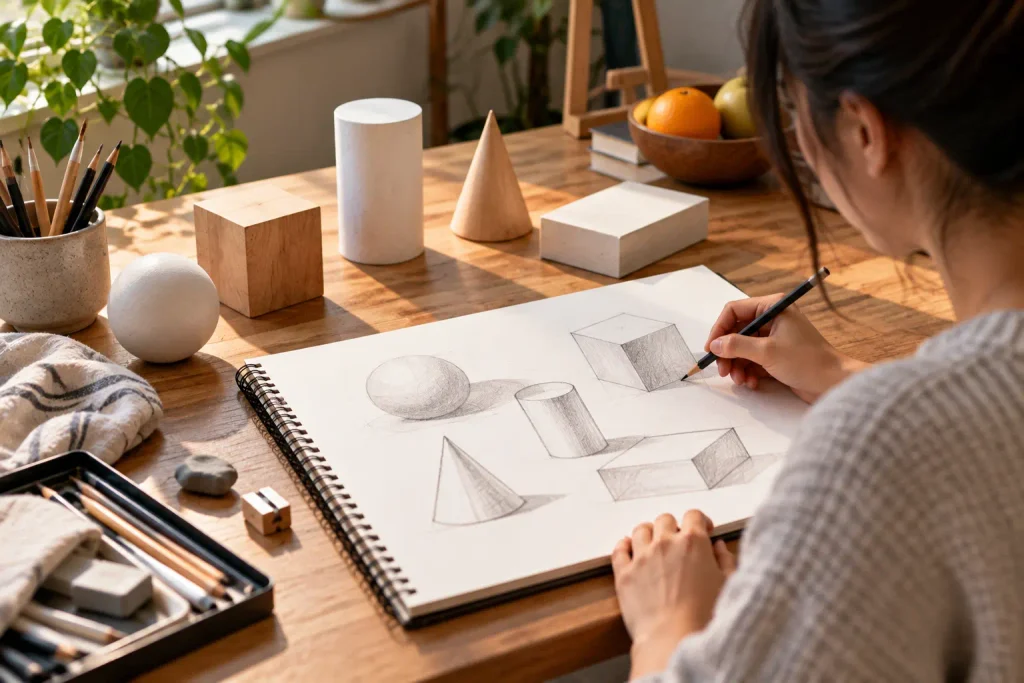
Every object you see can be reduced to simple shapes, like a ball becoming a circle or a box becoming a rectangle with depth. This way of thinking helps beginners focus on structure before worrying about small details.
With this approach in mind, follow the three steps below to make your first sketch feel less like a wild guess.
Circles, Squares, and Triangles Are the Easiest Shapes to Start With
Circles, squares, and triangles appear in almost every object you want to draw. These simple forms give your sketches a clear starting point because they help you understand the basic structure of what you see.
To build that skill, fill one page with twenty loose circles, drawn from the shoulder instead of the wrist. These circle exercises help steady your lines and improve your hand control over time.
Then shade each form with a soft pencil, so light and dark teach your hand where volume sits (most beginners skip this part entirely).
Building Recognizable Objects From Basic Shapes
Once those forms feel steady, stack them. For example, a mug is a cylinder with a flattened circle on top and a curved handle.
The same idea applies to other objects around you. A book is a box, while a lamp is a cone meeting a rod, and these simple forms make everyday objects easier to sketch.
Students who use this method for a three-object still life can complete a drawing they feel proud of, usually within twenty minutes.
Related Drawing Exercises to Try Next
Beyond shapes, a few drills stretch different muscles without asking you to draw a realistic portrait yet. Switching between exercises helps you practise different skills without getting stuck on one type of drawing.
Try three versions of the same object: draw it through blind contour, from memory, and with a two-minute time limit.
Blind contour means you stare at the object and never look down (yes, the results look terrible, and that’s fine). This exercise helps you focus on what you see instead of what you think the object should look like. Perspective boxes are another useful drill that can fix wonky tables and buildings by improving your understanding of depth.
If you need guidance while practising these exercises, video lessons such as Skillshare classes can walk you through the same drills at your own pace.
What to Draw for Beginners on the Days You Feel Stuck

The honest answer on what to draw for beginners is to draw whatever sits within arm’s reach of your chair. And honestly, your kitchen table on a Tuesday morning holds more usable subjects than any prompt list you could download tonight.
The ideas below can help you choose a simple subject and start your next sketch.
- Your Own Hand: Your hand is always nearby, and it gives you plenty to practise. Draw human knuckles, folds, and foreshortening in one subject to learn how shapes connect.
- Kitchen Objects: Garlic bulbs, crumpled foil, and a half-full glass of water each teach texture that a smooth apple never will.
- Shoes by the Door: Worn sneakers hold stitching, deep shadow, and a shape nobody has memorized, so you look instead of recalling.
- Photos From Your Phone: Scroll back six months, pick any image with heavy shadows, and sketch only the dark shapes you find.
Honestly, your subject counts for less than getting started. A plain object drawn with care beats a dream project you never begin, so keep a short list of subjects on your phone for next time you feel stuck.
Building a Daily Habit With Simple Drawing Practice Ideas

With a subject settled, the real question is how often you sit down. Frequency beats length for anyone folding drawing practice ideas into a routine.
Ten minutes of drawing every day for a month leaves you with thirty finished sketches. On the flip side, one three-hour Sunday session leaves you with only four. That difference is why we recommend short, daily practice in every beginner course we teach.
Make the setup effortless. Leave a sketchbook and one pencil open on the table where you eat breakfast (rummaging for a sharpener in a messy drawer kills your session early).
Still, building a habit takes time. Keep practising regularly, and small improvements will become easier to notice over time.
Progress hides at this stage, which is why dating every page helps. Flip back to week one after a month, and your line weight alone can reveal how much you have improved.
Finding Fresh Ideas: Where to Get Endless Drawing Prompts for Beginners
Once your routine feels steady, drawing prompts can help when the blank page returns by giving you new ideas and different ways to practise. Some feed you random nouns, while others hand you a themed month of drawing prompts for beginners.
Compare the four sources below against how much structure you want.
| Source | What you get | Best for |
|---|---|---|
| Daily challenge lists | One word prompt for each of 31 days | Building a streak |
| Beginner forum threads | Weekly themes plus feedback from other learners | Accountability |
| A free newsletter | Curated prompts and short lessons in your inbox | Steady input |
| Your own camera roll | Reference photos of places you already care about | Staying motivated |
Rotate sources every few weeks so your subjects stay varied, and skim the Privacy Policy before you hand over your email.
The purpose of a prompt is to break the silence of the blank page. After the first few lines, your own ideas often take over.
Pick Up a Pencil and Start Your First Sketch Today
Every artist whose work you admire started with wobbly circles and a page they wanted to hide. At first, the blank page can feel difficult to face, but simple subjects, useful prompts, and a practice routine can help you keep creating.
Throughout this guide, you learned how to start with basic shapes, find ideas in everyday objects, and build a drawing habit with short daily sessions. These simple steps help you move past creative blocks and keep making art.
Ready to make art alongside people who’ll cheer for your worst pages? Join The Heart Project for creative community programs that put tools, prompts, and encouragement directly in your hands.
Leave a Reply