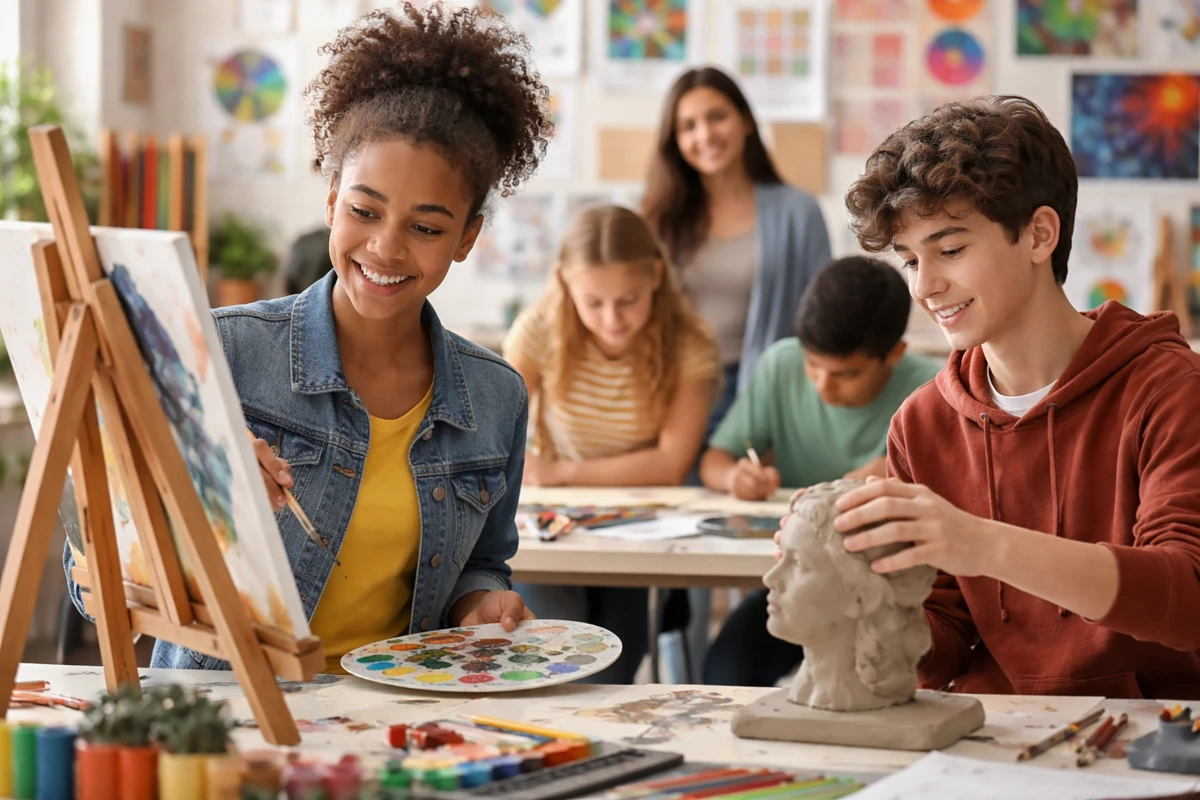
Art class builds confidence by permitting you to mess up without real consequences, and that entirely changes how you see learning. In fact, a study tracked students aged 14-16 who participated in at least two semester-long art workshops. And these students later achieved higher grades in both language arts and math compared to peers without art education.
In this article, we’ll explain how art classrooms operate differently from regular school spaces. You’ll also learn how creative practice develops real-world skills that employers want, and why online courses now reach students that traditional classes left behind.
If school made you doubt your judgment, keep reading on to fix that.
What Traditional Schools Miss About the Benefits of Learning Art
Art teaches skills like self-expression, creative thinking, and resilience that traditional subjects can’t measure with tests or grades.
As a result, students learn how to bounce back when projects don’t turn out right, figure out multiple solutions to the same problem, and communicate ideas that don’t fit into neat sentences or equations.
So what exactly gets lost when schools treat art education as optional? Take a look.
The Reason Art Education Gets Pushed Aside
Schools cut art programs first when funding drops. They treat creative classes as expendable compared to math and reading. Plus, the pressure to raise standardized test scores forces administrators to double down on subjects that show up in state rankings.
Because of that, art becomes an afterthought or an optional elective instead of part of regular education. Furthermore, students in the South report much lower access to visual arts courses than those in the Northeast. That creates huge gaps in who gets to experience creative learning and who gets stuck with test prep instead.
How Creative Expression Classes Work
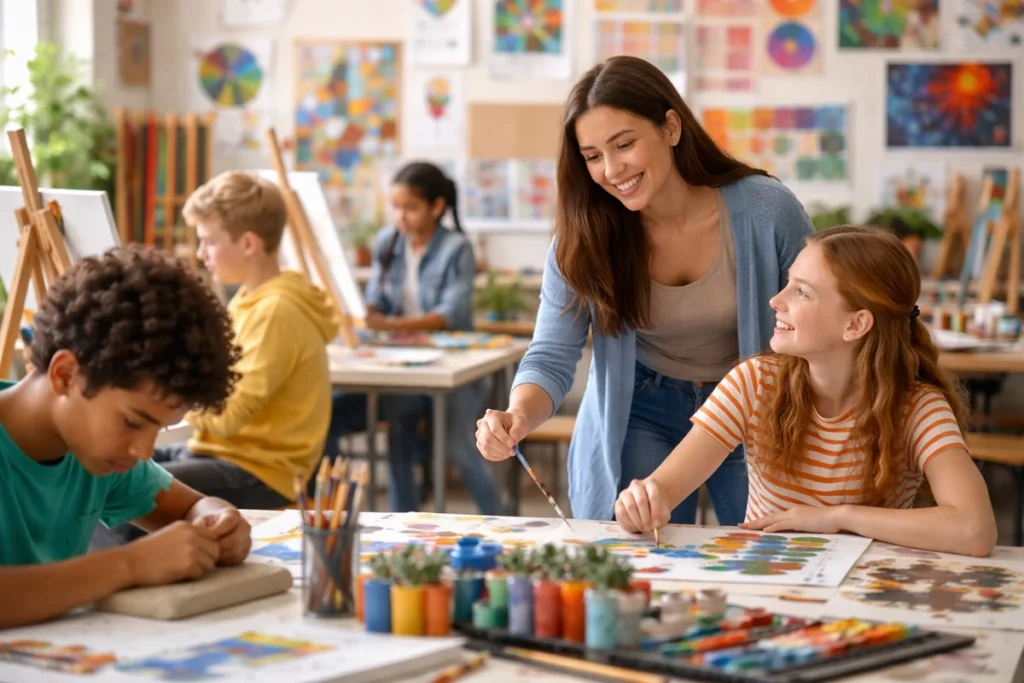
Creative classes flip the script of lecture-based learning. Here, you learn by making choices and experimenting. You don’t have to memorize someone else’s facts or formulas (the kind you forget by summer break). On top of that, students can make real decisions about their work instead of following rigid instructions with one correct outcome.
The classroom setup also encourages collaboration and bouncing ideas around. So when you want to create something, you’d have to actively think through problems rather than passively absorbing information.
Your Art Teacher Becomes a Guide, Not a Grader
If you walk into an art room, you’ll immediately notice it feels nothing like the rest of the school. Students there don’t sit in straight rows waiting for instructions. And teachers don’t stand at the front delivering information that everyone needs to write down.
Here’s how it influences learning.
What Makes the Art Room Different from Every Other Classroom
The physical setup of an art classroom already signals that you’ve entered a different learning space. Everything about it invites exploration instead of silent compliance. To give you an idea, this is what a typical art class looks like:
- Physical Setup Encourages Experimentation: Art rooms are filled with sketchbooks stacked everywhere, jars of brushes, sinks splattered with paint, and student work drying on lines like laundry.
- Movement Without Constant Permission: Students can move around freely, grab art books from shelves to reference, and access different materials without raising their hand for permission every time.
- Active Learning Environment: The space buzzes with creative energy instead of staying quiet and controlled like traditional classrooms with rows of desks facing forward.
- Process Over Perfection: You’ll see ongoing projects at different stages, not just finished work that’s ready to be graded and forgotten.
That messy, active environment teaches students that making art means experimenting with materials. And for a great result, you don’t always have to keep everything neat and predictable.
When Feedback Stops Feeling Like Criticism
When you work with an art teacher, they ask, “What are you trying to express?” instead of “Why didn’t you do it this way?”
Through years of running creative workshops for adults and teens, we’ve seen how this approach builds confidence differently. If teachers bounce ideas back and forth with students, it makes the relationship feel collaborative. You’ll feel like you’re discussing your work, not defending it (especially when it’s something you made yourself).
Students form stronger bonds with classmates, too. They connect over shared interests and creative ideas rather than just sitting near each other because of assigned seats.
Art for Personal Growth: What You Gain Beyond the Canvas
Learning art allows you to cultivate skills that you’ll later need everywhere. It strengthens your ability to handle job interviews, steer difficult conversations, and solve everyday problems. These are skills that many traditional school subjects rarely develop.
Let’s see something most people miss.
Problem-Solving Skills Employers Actually Want
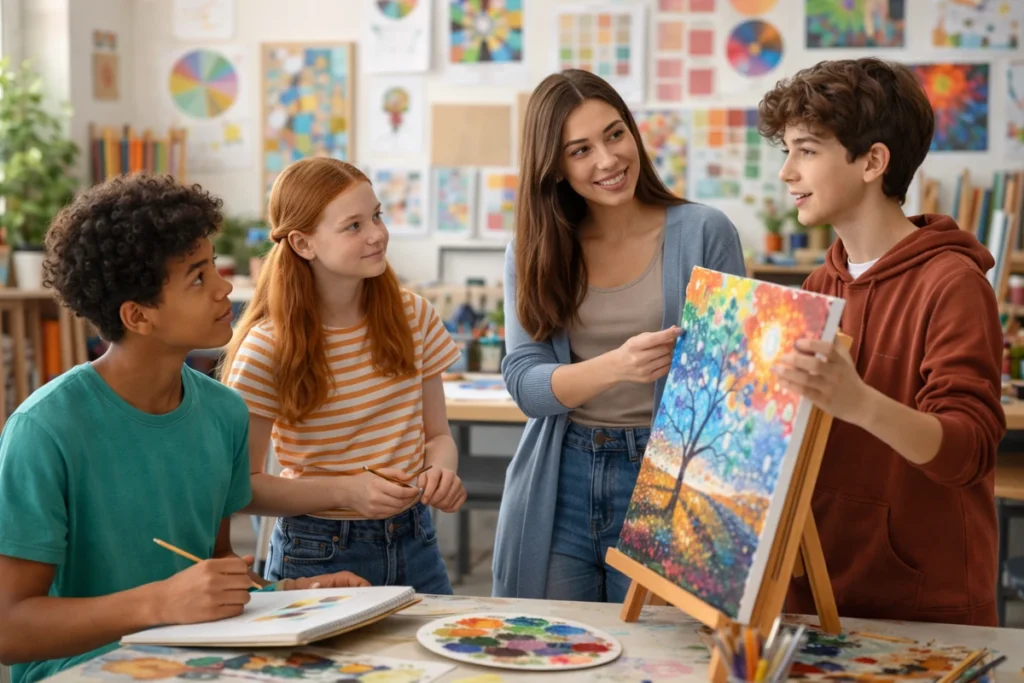
A 2025 employer survey showed that 70-80% companies want workers skilled in written communication, teamwork, and initiative. And the good news is, art classes strengthen all three.
It’s because creative projects teach you to develop original ideas and adapt when your first approach doesn’t work out. That’s exactly what employers need when unexpected problems show up at work.
What’s more, art students are trained to take feedback without getting defensive. They can easily revise their work based on new information and present their thinking both visually and verbally.
Down the line, students who practice this in art classes carry that skill into job interviews, team meetings, and client presentations.
Contemporary Art Techniques That Train Your Brain Differently
Different art forms challenge your brain in unique ways and build mental flexibility you can’t get from textbooks. For example, collage work teaches visual problem-solving. They combine unexpected materials and images into compositions that make sense.
Similarly, mixed media projects push you to think across disciplines by blending painting, drawing, photography, and digital elements together. Not just that, performance art and installation pieces build confidence in presenting ideas publicly and defending creative choices when people question them.
Ultimately, the more techniques you practice, the more your creativity expands.
Online Art Education Reaches More People
Can you really build self-confidence through a screen, without an in-person teacher watching over your shoulder? Turns out, online teaching connects with students in many effective ways that physical classrooms often can’t.
Take a look at how:
- Flexible Learning for Working Adults: Working adults who couldn’t fit daytime classes into their schedules can take evening and weekend creative workshops without commuting anywhere
- Access for Rural Communities: People in rural areas without nearby art schools can finally learn from professional artists and study contemporary techniques they’d never see locally
- A Safer Space for Anxious Learners: Students with social anxiety or past classroom trauma find online formats less intimidating for sharing work and getting feedback from the community
- Creative Freedom for Busy Parents: Parents who manage kids at home can pause video lessons, practice at odd hours, and still connect with other artists through online discussion boards.
In reality, online art courses open doors for people who traditional classes accidentally shut out. And access can be more effective than hands-on training in many circumstances.
Learning Without the Baggage of Past Art Class Trauma
Many adults avoid art classes because they remember being told they weren’t“talented enough” back in school.
While working with hundreds of adult students restarting their creative journey, we’ve often encountered how that one comment (usually from one teacher who wasn’t supportive) sticks with people for decades.
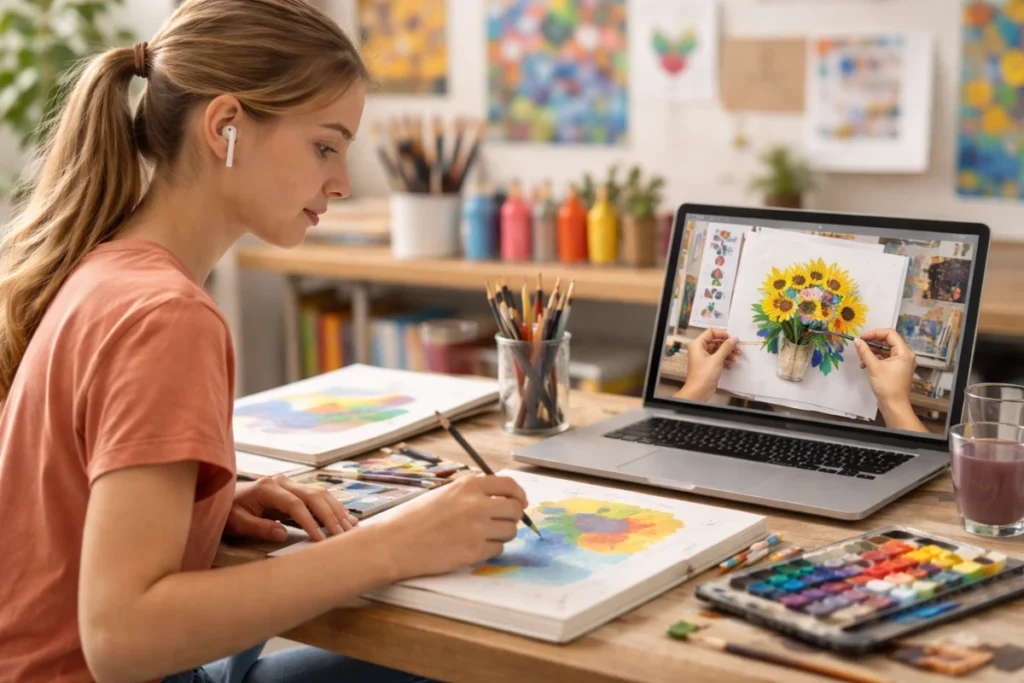
This is where online art education lets you work at your own speed without comparing your progress to the person next to you. Nobody’s watching you struggle with basic techniques or judging your early attempts at making art.
You can also rewatch demonstrations until you understand a technique, pause to practice before moving forward, and submit your own work without performing in front of a group. That removes the pressure that made traditional classes feel threatening.
Make Your First Brushstroke
Art can build confidence in ways that traditional education misses because it values your unique perspective over getting the “right” answer. Creative practice teaches you to trust yourself and express ideas without fear.
If you’re returning to creativity after years away or exploring art for the first time, the first step is more important than any finished piece. It could be mixing paint, sketching a shape, or picking a color.
To help you with that, online platforms like The Heart Project offer courses taught by professional artists. They understand that learning art as an adult means unlearning the idea that you’re “not creative enough.” Plus, the workshops focus on building confidence through hands-on practice, not chasing perfectionism. So visit our website, and build your confidence.
Leave a Reply