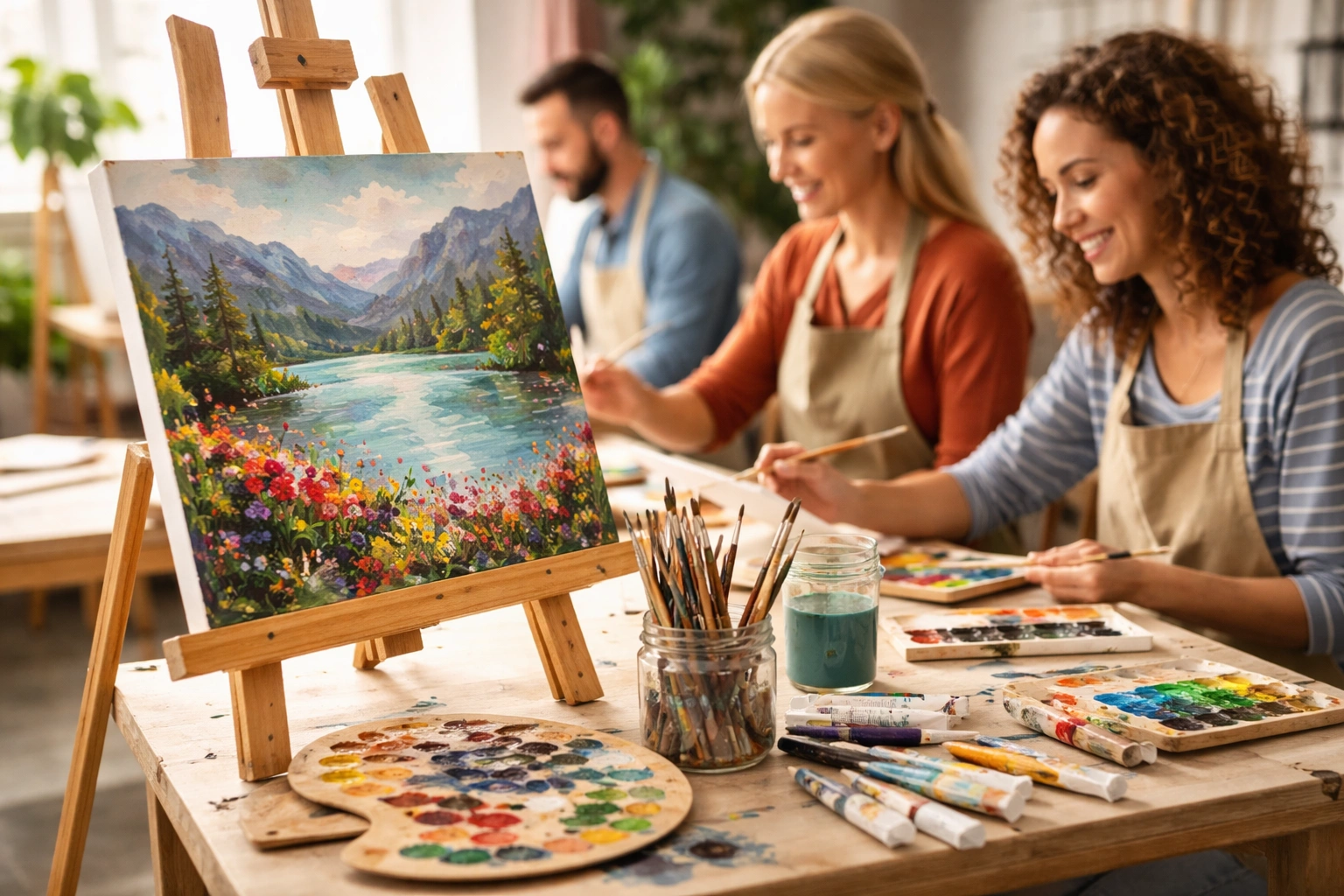
When adults start making art again after years away, they rediscover a sense of playfulness they’d forgotten existed. In fact, according to the latest report by the National Endowment for the Arts, 51.8% of U.S. adults had returned to creative hobbies they’d abandoned during their busiest career years.
While picking up a paintbrush or sketchbook after a decade, some folks even cry at how rusty their hands feel. But those awkward first moments fade fast, and what replaces them is a pleasant surprise.
This article covers the real experiences of adults returning to art after years. You’ll find out what those nerve-wracking first classes truly look like, how long progress takes, and the reason trying different mediums helps you better when you come back.
Let’s see how to fit this hobby back into your life.
Why Adults Return to Art: The Pull Back to Creating
Adults come back to art usually when life creates enough space to notice what’s been missing. And the reasons have nothing to do with talent or the goal of becoming professional artists.
Here’s why so many people pick up creative hobbies again after years away.
When Life Quiets Down Enough to Notice
Many adults realize they haven’t made anything creative with their hands in decades and actually miss it. Especially when career pressures ease up, kids grow older, or retirement opens up chunks of free time that weren’t there before.
The desire to create resurfaces once life stops demanding every single minute of attention and energy. And you might find yourself scrolling past drawing tutorials online or pausing at art supply displays, feeling that old itch you’d nearly forgotten about.
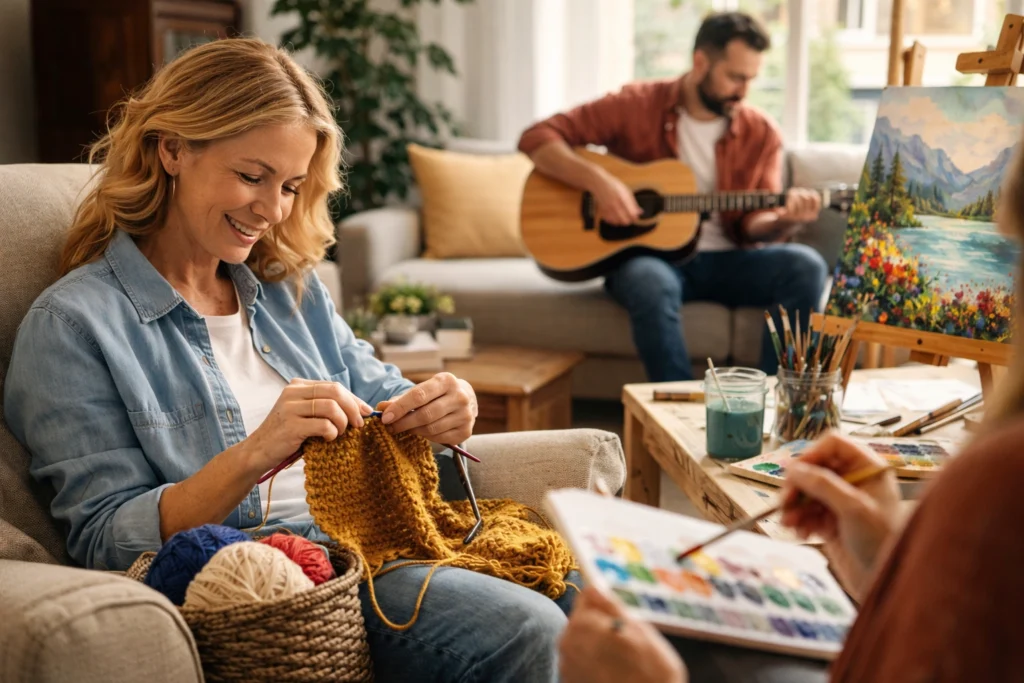
Finding Joy Again Through Creative Hobbies
Adult life centers around productivity and measurable outcomes. Meanwhile, creative hobbies let you experiment without needing results or performance reviews.
Making art reconnects you with the kind of playing and messing around that disappeared somewhere between childhood and building a career. You get to express yourself and relax without tracking your time or justifying the effort to anyone.
What Happens in Those First Art Classes for Adults
Walking into a studio after a long time can feel like a mix of nervousness and curiosity that’s hard to describe. But the good thing is, most people in beginner classes are in the same boat. And that makes the whole experience less intimidating than you’d think.
This is what you can expect in your first classes:
- Walking In For The First Time: Everyone worries their work will look childish compared to others in the room (we’ve all been there). However, instructors create a space where being terrible at drawing or painting on day one is completely normal and expected.
- Getting Your Hands Working Again: Classes usually start with basic exercises that help your hands remember how to hold brushes and pencils. These aren’t complicated techniques, just simple warm-ups with paper and different tools to shake off the rust.
- When It Starts Feeling Less Scary: The relief hits when you realize that other students are struggling with the same things. Like when someone else’s sketch looks wonky too, you’ll be less alone in feeling like a complete beginner who doesn’t know what they’re doing.
By the second or third class, most people start to focus on the fun of just making art instead of judging every brushstroke. Ultimately, you’re there to learn, not to be an artist right away.
Creating Art for the First Time: Expectations vs. Reality
Your beginner art journey as an adult brings along skills that kids don’t have yet. Unlike a young learner, you’ve got patience, life experience, and the ability to focus without needing constant supervision. But even after that, expectations and reality don’t always match up when you’re learning art later in life.
Take a look at how reality can differ from expectations.
Learning Art Later in Life Means Learning Differently
Adults bring life experience that helps with composition, color choices, and understanding visual storytelling better than younger students. Drawing from our experience working with adult learners, patience in practice becomes more natural when you’ve already mastered other difficult skills in your career.
What’s more, adult learners ask better questions and research techniques more thoroughly than kids do. Instead of copying what the teacher shows you, you think about why certain painting or drawing methods work. This speeds up how quickly you pick up new skills.
The Fear of “Being Bad” Hits Differently Now
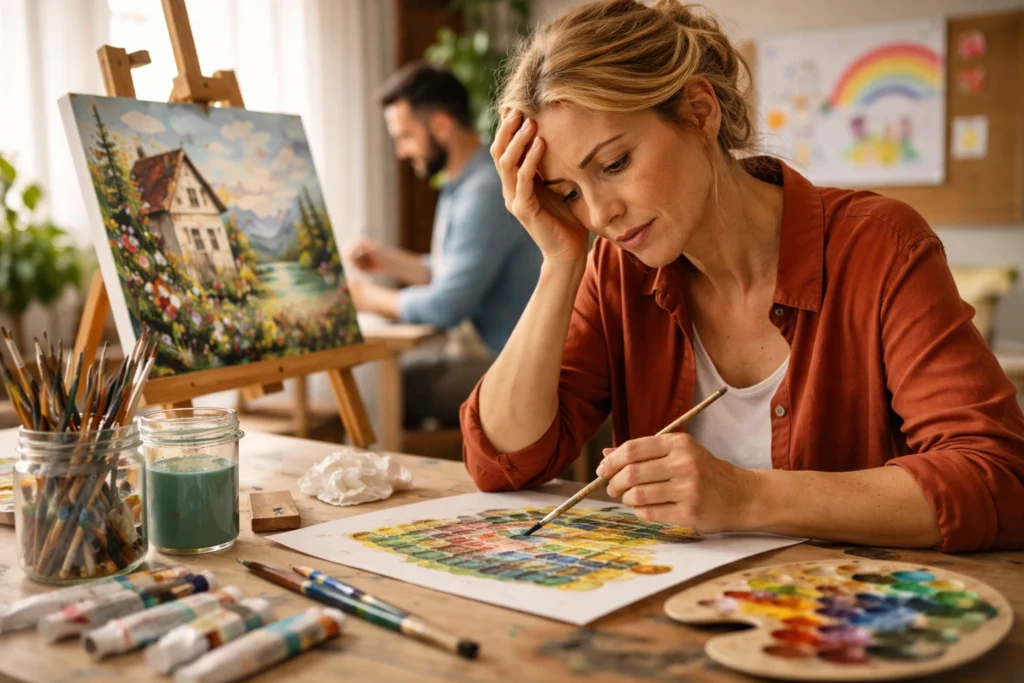
Kids don’t care if their drawings look wonky, but adults carry perfectionism and self-judgment heavily.
And here’s the thing: showing beginner work to friends feels vulnerable in ways it didn’t when you were twelve and proudly stuck every sketch on the fridge. That fear of looking terrible holds more people back from trying art than the lack of talent.
How Long Before You See Progress
Most people notice improvement within three months of regular practice. Progress shows up in small signs first, like steadier hand control or better color mixing instincts. Over time, you’ll see your artwork slowly getting closer to what you picture in your head.
For example, Van Gogh became a master artist in ten years of dedicated work after starting seriously at twenty-seven. That’s proof that you don’t need a lifetime or to be younger to create something meaningful. Just effort and showing up to practice one day at a time is more important than when you started.
Mixed Media and Experimenting
Choosing just one art medium and sticking to it sounds safe, but it might slow down your progress. In fact, experimenting with different mediums teaches you skills that transfer across the board.
This is how mixed media can help you progress faster:
- What Mixed Media Is: Mixed media combines materials like magazines, fabric, paint, and found objects into textured, layered pieces. For instance, you might sketch something in pencil on paper, add watercolor for color, then glue on bits of craft materials for texture.
- Trying Different Mediums Each Week: Each one teaches different lessons about color, texture, and control. Maybe jump between charcoal, gouache, or even calligraphy to see what clicks. You’ll pick up skills here and there that improve your drawing and painting across everything you try.
- Using What You Already Have: Recycled materials and household items work great for mixed media projects without expensive shop trips. Even old magazines, cardboard, fabric scraps, and cool packaging can become part of your artwork.
Playing around with different tools and mediums helps you find out what you truly enjoy creating. We’ve seen some people dive into watercolor and never look back, while others love mixing everything together on one canvas.
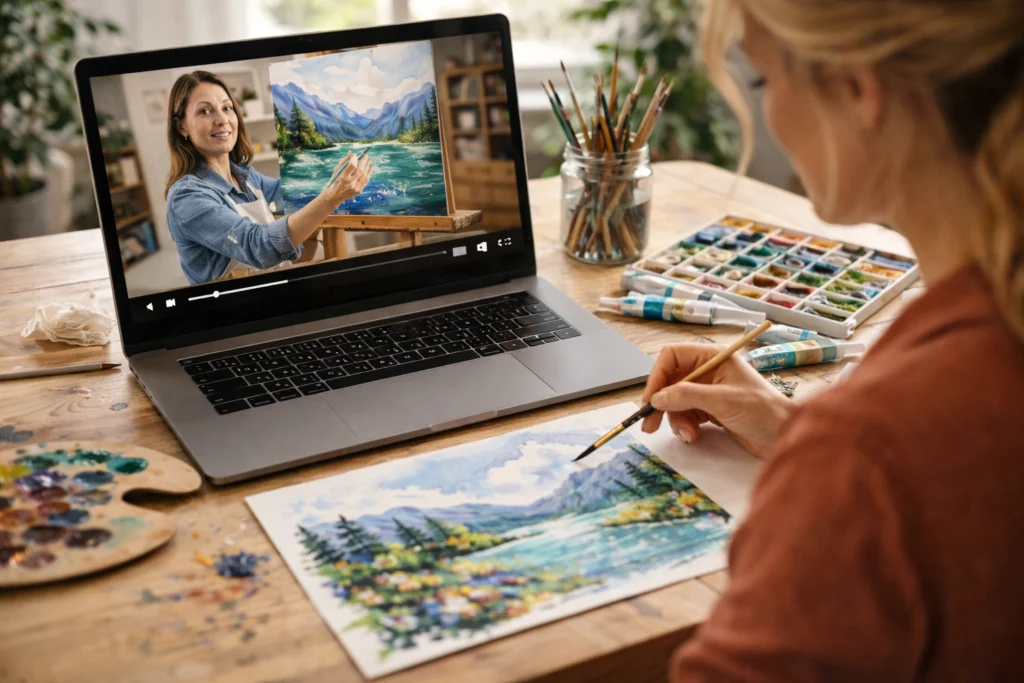
Finding Your Way on an Online Art Platform
Online art platforms give you the ability to rewind your instructor and practice on your own schedule, which in-person classes can’t. You’re not rushing to keep up or missing steps because someone moved on too fast.
Based on our firsthand experience with online creative workshops, access to multiple instructors allows you to find teaching styles that match how your brain processes information. Say, one teacher might focus on watercolor techniques while another breaks down drawing fundamentals in a completely different way.
Along with that, online communities connect you with other adult learners working through the same beginner challenges. You can post your artwork, get tips from friends who’ve been at it a bit longer, and hang out in spaces where everyone’s figuring out this whole art thing together (sounds tedious, we know, but it helps).
Restart Your Creative Life This Week
Returning to art after years away brings back a sense of play most adults forgot they were missing. Those first art classes for adults might feel awkward, but the discomfort fades faster than you fear. In fact, learning art later in life comes with more advantages than obstacles.
If you’re ready to start this hobby soon, The Heart Project offers online courses designed for adults reconnecting with their creative side. The platform gives you flexibility to learn at your own pace with instructors who understand the unique challenges adult learners face.
So pick up that paintbrush, grab some charcoal, or splatter some acrylic. Your creative life is waiting to be restarted, and the world of art is a lot more welcoming than you remember.
Leave a Reply