
Beginners often create more original work because they haven’t learned to second-guess their instincts yet. Besides, they are not worried about following the “right” techniques or matching what professional artists do. That freedom often lets their creativity flow without the filters as a beginner.
Most people assume they need years of practice before calling themselves an artist. But that thinking actually holds you back from discovering your natural creative style. Remember, your beginner mindset is an advantage, not a weakness.
This article breaks down why starting fresh gives you creative strengths that experienced artists work hard to reclaim. You’ll learn how to use your beginner art perspective to build real skills, stop comparing yourself to others, and develop daily habits that keep your creativity growing.
Let’s get into it.
Why Beginners Doubt Their Creative Abilities
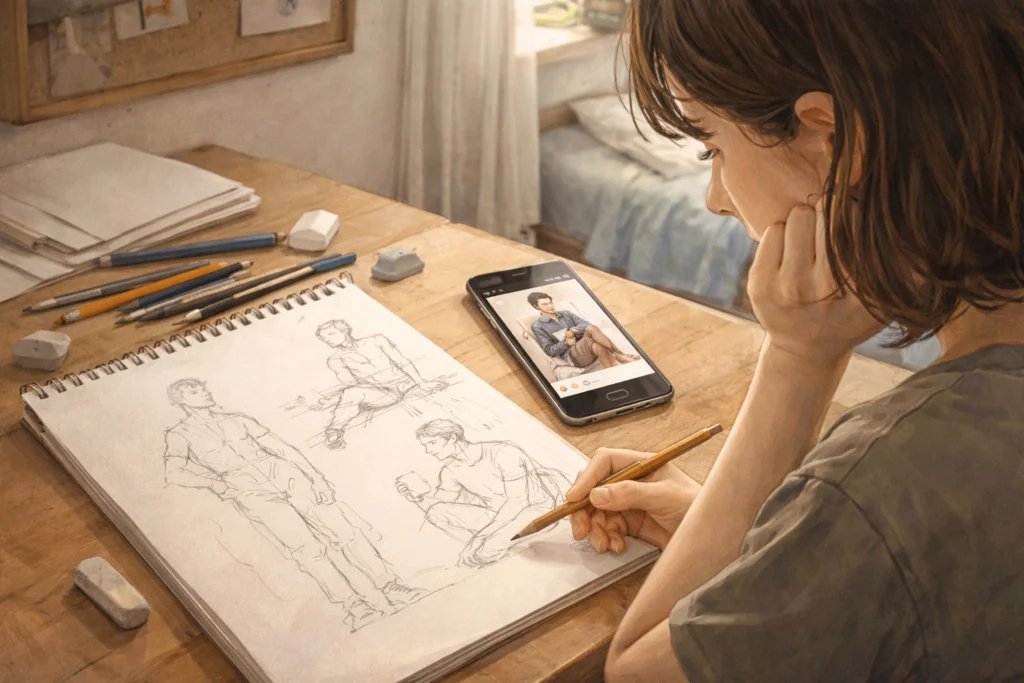
Frankly, most beginners doubt themselves at the beginning because they believe artistic talent is natural rather than learned through practice. But that’s the wrong way to go about it.
Here are a few basic reasons why they doubt their artistic mindset:
The Skill vs. Talent Myth in Beginner Art
Many people think you’re either born with the ability to draw or you’re not. But through our workshops at The HeArt Project, we’ve seen that creative thinking and artistic skills improve through consistent effort rather than starting point. It means the learning process works the same for everyone.
However, when you practice regularly, your brain builds new connections that strengthen your skills. We’ve seen beginner artists show measurable growth in their work, even when they felt like nothing was changing.
The disappointing thing is that the “talent myth” stops countless people from even trying. They look at skilled artists and assume those creators were just born different. That thinking keeps you stuck before you even start.
Comparing Yourself to Experienced Artists
Social media shows you polished final pieces but hides the years of practice behind them (and yes, we’ve all fallen into that Instagram rabbit hole). Here, you’re seeing an artist’s best work from their tenth year, not their first attempt.
That’s why, when you compare your early sketches to someone who’s been creating for a decade, of course, it feels discouraging. Your inner critic loves this game because you’ll always lose. But in reality, such a comparison misses the entire point.
Every successful artist started exactly where you are now. They made wonky proportions, struggled with shading, and questioned whether they had any creativity at all. It proves the difference between you and them isn’t talent. It’s just time and consistent practice.
Remember: The world doesn’t need you to be perfect on day one.
The Hidden Strengths of Beginner Artists

The best part about being a beginner is that you haven’t learned the “rules” that limit experienced artists. So, let’s see the types of advantage this non-following of rules can bring:
Fresh Eyes Bring Diverse Perspectives
At the start, beginners don’t learn the “correct” techniques, so they test things that formally trained artists wouldn’t try. With this random testing, you discover how compositions should work without years of art school training.
More importantly, you mix methods from painting, drawing, and other creative ideas in ways that shouldn’t work but do.
Gradually, this outsider perspective leads to innovation that takes trained creators years to rediscover. It’s because you solve problems based on what makes sense to you, and that fresh thinking often produces the most interesting work.
No Rules Means More Innovative Thinking
Not knowing traditional art rules gives you creative freedom to approach problem-solving differently (the same freedom that led to entire art movements, by the way). On the flip side, experienced artists sometimes get stuck following techniques they learned a decade ago.
When you’re not worried about breaking the status quo, you explore solutions that a trained mind would dismiss. That’s where creative problem-solving happens. You’re figuring out what works through direct experience, not memorized formulas.
Mistakes Become Creative Thought Experiments
Beginners treat every “mistake” as an opportunity to learn from rather than a sign of not being good enough. And that’s where things get interesting. Those happy accidents often become signature techniques once you recognize their value.
Plus, without pressure to create perfect work, you play with ideas more freely. That sense of fun ultimately leads to growth because you’re focused on discovery, not judgment. R
Verdict: The insights you gain from experimenting often surpass those from any textbook lesson.
Building Your Artistic Foundation: Where to Start
What if you could build real artistic skills in just 15 minutes a day? It sounds impossible. But we’ve noticed that beginners who use these strategies learn faster and keep the joy in the process.
- One Simple Medium: Pick either pencil sketching or watercolor to focus on for your first month. Listen to us. Don’t try to mix five different art forms because your goal is to learn the fundamentals and develop an artistic mindset without confusion.
- Everyday Subjects Work Best: When you practice every day, try to sketch your coffee mug, houseplants, or pets rather than complex landscapes. These familiar objects give you a reference point as you learn to draw what you see.
- 15-20 Minute Daily Sessions: Small blocks of creating time build the habit without demanding hours you might not have. This approach works especially well if you have a day job or children. The person who sketches daily for two weeks sees more growth than someone waiting for perfect three-hour windows.
- Beginner Art Communities Online: Platforms like Reddit’s r/learntodraw or beginner-focused classes show real progress from real people. When you engage with these resources, you’ll find motivation and practical tips that formal courses sometimes skip.
- Value of Your Early Sketches: Keep your daily sketches to track improvement over weeks. For example, comparing week-one attempts to week-four work provides concrete proof that your effort is paying off, even when the current drawing feels frustrating.
Pro tip: The skills you build in these first weeks create the foundation for long-term success, so focus on consistency over perfection.
Beginner Mistakes That Lead to Long-Term Success
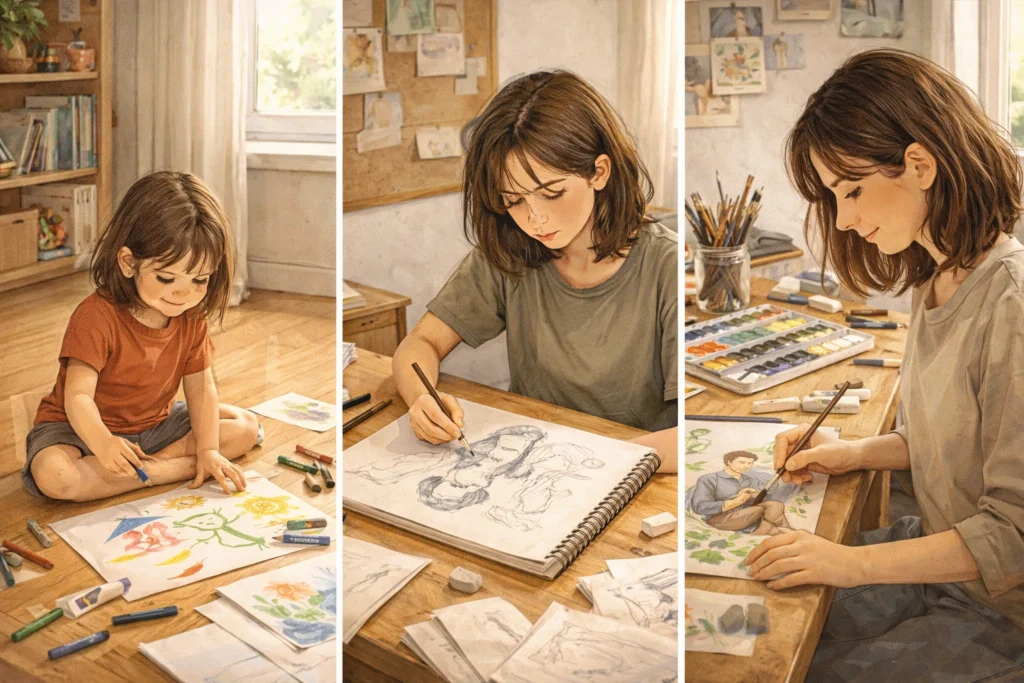
Remember, what looks like a mistake today often becomes your signature approach tomorrow. So, the concept of “productive failure” shows up across creative fields because errors force you to explore solutions you’d never find by following instructions.
On top of that, when you test things without knowing the “right” way, you accidentally discover innovation that trained artists spend years trying to reclaim.
Let’s have a look at a few mistakes and how they come out as creativity later:
Example | The “Mistake” | The Outcome |
Children learning to draw | Kids use creative freedom to try color combos and shapes that seem “wrong” by traditional standards. | They develop ideas faster because they’re not self-censoring. This mindset builds artistic confidence more quickly than adult learners. |
Artists building a business | Beginners mix various situations and mediums with no formal plan, like combining watercolor with digital tools. | These experiments create unique styles that help their creative business stand out. Innovation comes from trying what hasn’t been done. |
Developing your voice | New artists copy styles they admire, which seems to lack originality at first. | When you explore different approaches, you naturally develop a blend that becomes yours. The growth from testing beats rigid training. |
Bottom line: Your beginner mistakes aren’t setbacks. They’re the foundation for creativity that drives long-term success in your artistic journey.
Your Creative Journey Starts Now
You don’t need permission to call yourself an artist. The creativity you have right now (with all its uncertainty and exploration) is exactly what makes beginner work so valuable. Your fresh thinking and willingness to try without knowing the “rules” already puts you ahead.
The mindset you’re building today creates the foundation for real growth and innovation. Every sketch, every color choice, every “mistake” you make is teaching you something that no course can fully explain. That’s the importance of just starting, even when success feels far away.
Ready to explore your artistic potential with guidance and support? The HeArt Project offers online courses designed for beginners who want to develop their creative skills in an inspiring environment.
Our instructors understand the challenges you’re facing because they’ve been exactly where you are. Join us and discover how your effort today shapes the artist you’ll become.
Leave a Reply