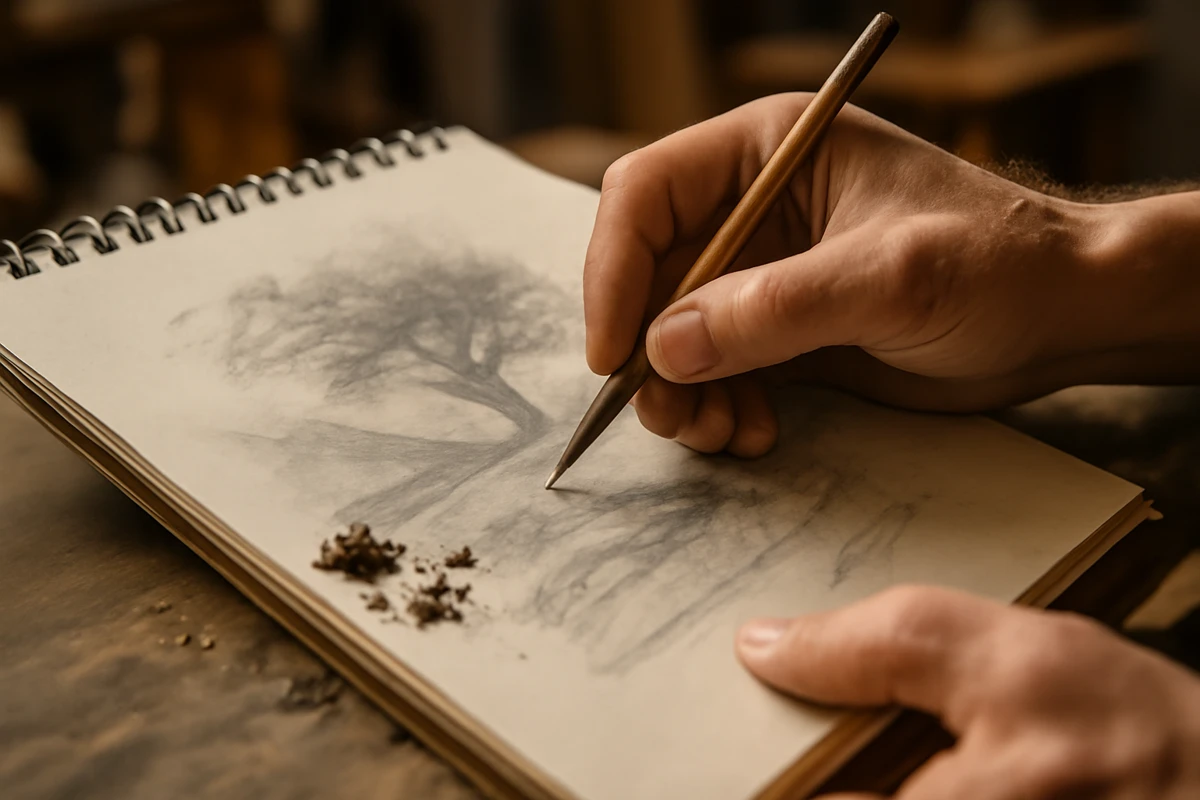
Remember the last time you made something with your hands? Maybe it was years ago in a school art class, or maybe you’ve been away from creative work so long you can’t quite recall.
Here’s the thing: you’re inherently creative, even if it doesn’t feel that way right now. Making art with your hands gives you something that screens and digital work just can’t match. The weight of a paintbrush, the smell of clay, and the scratch of a pencil on paper all bring you back to the present moment.
We know this because we’ve spent years watching people rediscover their creative side with our workshops and classes.
In this guide, we’ll share what we’ve learned about building a creative practice that actually sticks. You’ll learn:
- What creative practice mean
- How to start without fancy supplies
- Ways creativity helps solve everyday problems
- Simple steps to make time to practice
Let’s get started.
What Is a Creative Practice?
A creative practice is your intentional approach to making art, including how you learn, create, and reflect on your work.
But it’s more than just showing up with a sketchbook or lump of clay. It includes everything around the art itself. Things like:
- How you get inspired before you start
- How you build skills along the way
- The moments when you step back and think about what you made
Your practice feels different from someone else’s because it’s influenced by your personality and natural habits. Some people love quiet morning sessions with coffee and a notebook. Others do their best creative thinking late at night with music playing.
Why Your Creative Practice Is Worth Your Time
Your creative practice is worth the time because it gives structure, builds confidence, and helps you create art that feels genuinely like you. In fact, sticking with it builds momentum that keeps you moving forward. Even small, consistent sessions can create huge shifts in artistic growth.
Here are two major reasons why building a creative practice changes everything:
1. A Place to Return To When Things Get Messy
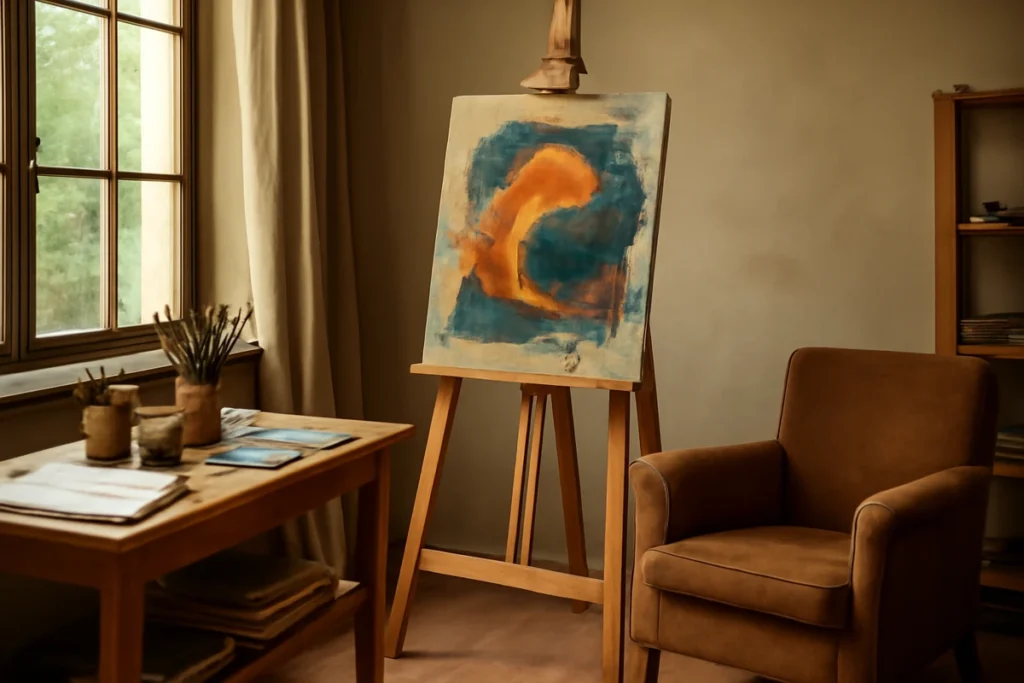
The best part about having a creative practice is that it gives you somewhere solid to land when inspiration runs dry.
Think of it as your home base. When you feel lost about the artistic direction, your practice acts as a foundation you can return to. It provides the clarity you need, so you don’t lose yourself in other people’s expectations or chase trends that don’t fit who you are.
Instead, it helps you stay grounded in what’s important to you: your own ideas and the creative work that feels right.
2. Building Trust: How Practice Develops Your Own Ideas
Regular practice is the fastest way to stop second-guessing every artistic choice you make.
When you show up consistently, even for short sessions, you start building confidence in your decisions. You begin recognizing your unique voice instead of copying what everyone else does.
Also, it creates a reliable process for moving through creative blocks and those moments when self-doubt creeps in. Over time, this lets you develop work that genuinely reflects who you are.
But knowing why a creative practice helps is only half the story. The real question is how it shows up in day-to-day life.
Hands-On Art: Where the Real Work Happens
Have you noticed how different it feels to sketch on paper versus tapping on a screen? That’s because hands-on art (the kind where you touch and shape materials) is where the real work happens.
Physical art-making connects you to materials in ways that digital creation can’t replicate. When you’re working with your hands, whether it’s painting, pottery, or even simple drawing, you slow down. You have to be present with the process. The reason is that tactile work (making things you can touch and feel) demands your full attention.
What’s more, spending time on activities like pottery or painting improves mental well-being and greater life satisfaction. Who knew therapy could involve clay under the fingernails?
And here’s what we’ve seen happen over and over: hands-on art reveals unexpected solutions.
You mix the wrong colors and discover something beautiful. You mess up a clay piece and find a new technique. These happy accidents teach you to trust the process instead of controlling every outcome.
How to Start Your Creative Practice Today
With a single activity, a small time commitment, and permission to mess up, you can start your practice this week.
In our experience, starting doesn’t require expensive supplies or a perfect studio setup. You just need the willingness to try.
Do these three things to get going:
1. What’s One Thing You Can Do Right Now?
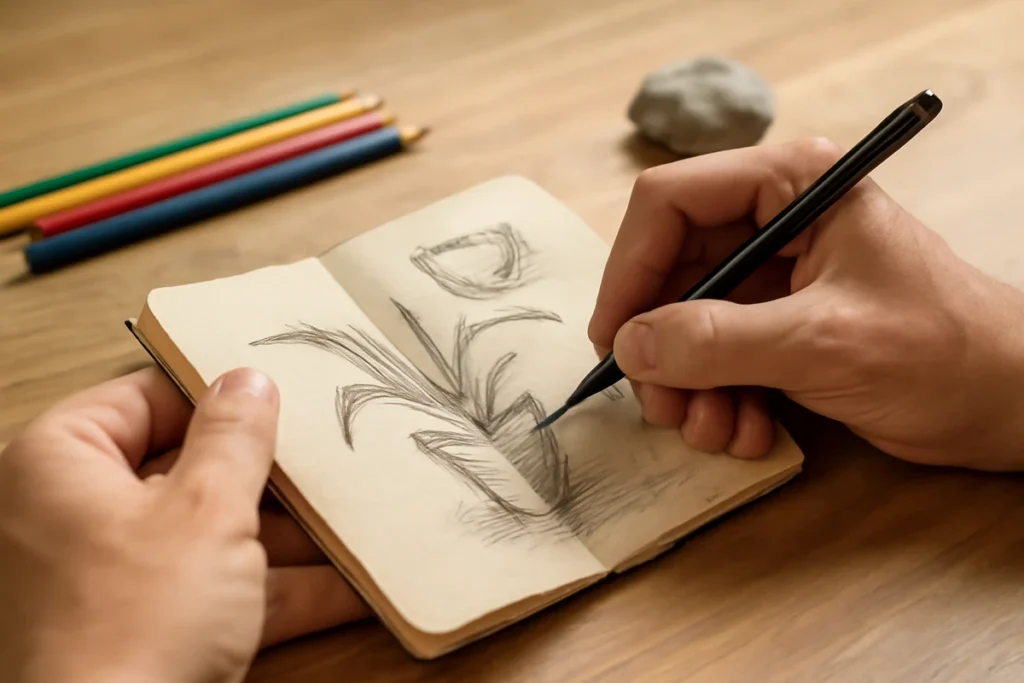
Well, start by picking one creative activity you already enjoy and doing it once this week. Maybe it’s sketching in a notebook you already own. Or molding something with clay from a craft store.
What matters most is to pick one thing and actually do it. Don’t wait for the perfect brushes or the right workspace. You can create something amazing even with a ballpoint pen and printer paper (yes, we’ve seen masterpieces born from office supplies).
Quick Win: Start small with supplies you already have, rather than convincing yourself you need fancy tools first.
2. Making Room for Your Inner Artist
When was the last time you put creative time on your calendar like a real appointment? If you’re like most people, probably never.
But we suggest scheduling specific time slots for creating your art (even if it’s just twenty minutes twice a week). Protect this time limit from other commitments. And treat it as important as any doctor’s appointment or work meeting.
The most important thing is giving yourself the space and room to explore without guilt.
3. Permission to Play Around
Permitting yourself to experiment badly is how you stumble onto your best work. So here’s what to focus on:
- Release the pressure to create something good
- Focus on exploring materials and techniques
- Try new things without worrying about the result
Also, treat early sessions as experiments where the goal is curiosity and having a great time, not producing finished pieces. Fun is the whole point here. Once you let yourself play, the serious work follows naturally.
Now that you know how to start, you might be wondering what happens next. The effects of a creative practice don’t stay confined to your art table.
When Your Creative Practice Touches Other Areas of Life
Creative thinking developed through art-making naturally spills into problem-solving everywhere else.
When you spend time figuring out why the painting looks off or how to fix a wonky pottery rim, you’re training your brain to approach challenges differently. That same patience and persistence you build in your practice helps you handle tough situations outside the studio.
The insights you gain from creative work show up in surprising ways. You start noticing patterns you didn’t see before. You connect ideas that seem unrelated.
And regular creative time provides the mental rest your brain needs to stay focused and clear in other areas of your life. Research from the American Psychiatric Association shows that engaging in creative activities can significantly improve mental health and overall well-being.
But creativity doesn’t just change how you think. It also influences how you grow your skills without losing what makes you, well, you.
Building Skills While Staying True to Yourself
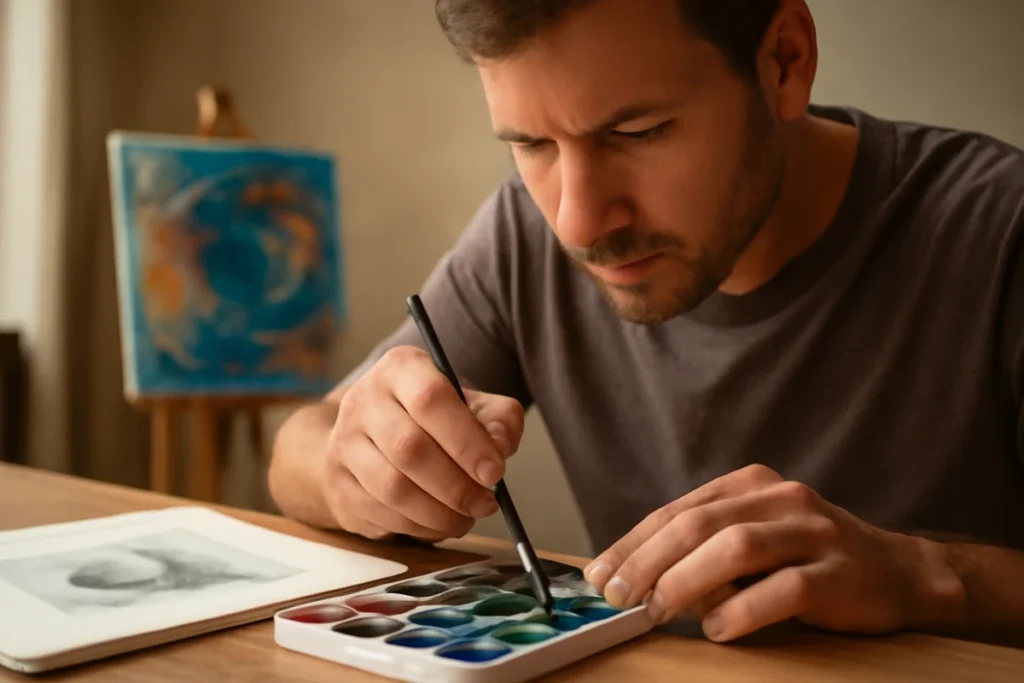
Worried that learning proper techniques will make your art feel stiff or generic? Yeah, it’s a common fear among beginners. However, it’s not how skill-building actually works.
Skill-building doesn’t mean losing your unique voice or copying someone else’s complete style. When you practice technical skills like mixing colors in painting or centering clay on a pottery wheel, you gain more ways to express your ideas through art.
The truth is, learning the craft is like expanding your vocabulary. The more words you know, the better you can share what’s in your own imagination.
The goal is to balance learning foundational techniques with making work that feels authentic and personally meaningful to you. The skills grow stronger without erasing what makes your ideas distinctly yours.
Try this: Study how other artists use light and shadow, then apply that knowledge in a way that reflects your unique perspective. This approach lets you learn from others while keeping your voice intact.
Start Making Art on Your Own Terms
You now have everything you need to begin building the practice that works for you.
Your practice belongs to you and doesn’t need external validation. The joy comes from the process itself, not from what other people think of your work.
So take the first small step today rather than waiting for perfect conditions or confidence. Pick up that sketchbook or sign up for a pottery class. Set aside twenty minutes this weekend to explore an idea that’s been sitting in the back of the mind.
This guide covered what creative practice means, why it’s worth your time, and how to start building one that fits your life. If you’re sketching architectural concepts, exploring abstract painting, or simply experimenting with new materials, our team at The Heart Project can help you explore creative spaces.
Contact us today and find the inspiration you’ve been looking for.
Leave a Reply