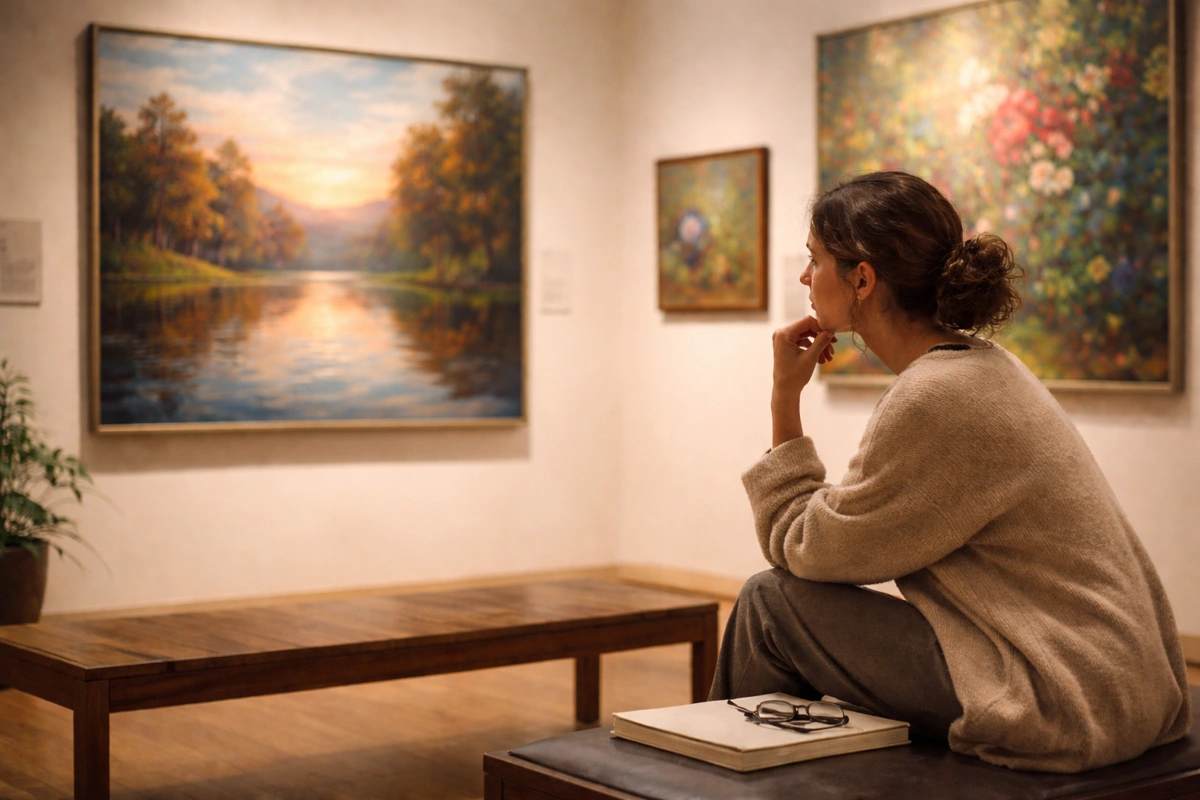
Most museum visitors spend around 17 to 27 seconds looking at each painting before moving to the next one. That amount of time barely gives your brain enough chance to register what’s in front of you, let alone feel something about it.
However, slow art completely inverts that habit. Instead of glancing and walking away, you end up staying with one piece for at least five minutes. And the longer you look, the more details you start noticing.
In this article, you’ll learn what slow art involves and how it connects to creative mindfulness. You’ll also learn why oil paint naturally slows your hand down, along with a phone-based exercise that sharpens your eye for value and composition.
So keep reading if you want to connect more with art.
What is Slow Art? A Simple Change in How You Look
Slow art means spending at least five minutes looking at a single painting instead of glancing and moving on.
A lot of the time, we treat museums like marathons, trying to see everything before we leave. But when you slow down and stay with one piece, you start noticing the true value of an artwork.
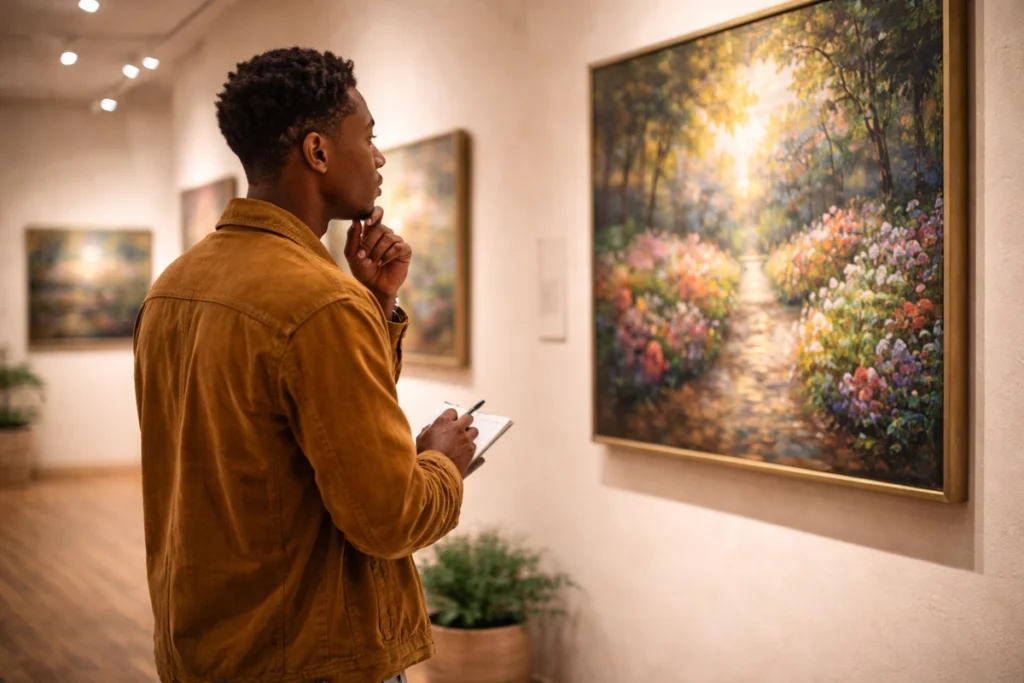
Here’s why taking more time to observe an artwork is the best approach.
Why Most of Us Rush Past Paintings
You usually end up rushing in museums because they feel overwhelming when you’re trying to see everything in one visit (and yes, we’ve all been guilty of this). Your brain switches into quick scanning mode, especially with phones buzzing and other distractions pulling your focus away from the artworks.
On top of that, gallery fatigue sets in after about 20 minutes. By then, you’re speed-walking through rooms without absorbing any detail from what’s hanging on the walls.
The Five-Minute Rule That Changes Your Perception
Spending five full minutes with one artwork lets you see layers you missed at first. You detect brush strokes hiding in corners, see how the artist built up layers, or catch the way shadows create a mood you completely missed during that first glance.
Slow art permits you to look longer without needing an art history degree. The longer you stay focused on a single piece, the more connections and stories begin surfacing naturally.
Creative Mindfulness: When You Stop and Stare
Have you ever noticed how your mind races even when you’re trying to relax? Slow art can change that. Especially if traditional meditation isn’t your cup of tea, slow looking can give you a more practical alternative.
Slow looking calms the chatter in your head because your focus lands on visual details instead of racing thoughts. Here, you’re not trying to think about “nothingness” like traditional meditation techniques. Rather, you’re looking at actual shapes and colors on a canvas, which gives your mind something to hold onto.
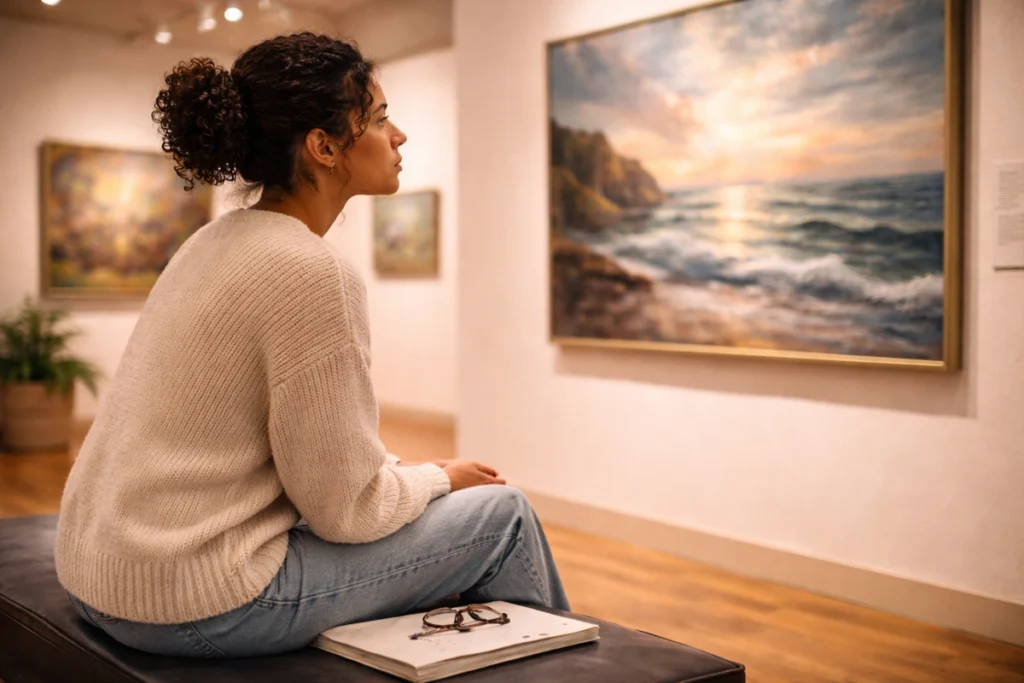
You also start seeing how light moves across the painting or how shadows build a specific mood. This focused practice feels easier than traditional mindfulness because you’re working with something concrete and visual.
After three or four minutes, emotions begin to surface that a glance often misses. You might notice feelings of calm, curiosity, or even slight discomfort.
That’s creative mindfulness at work. Instead of analyzing the painting or trying to “get it,” you’re just letting yourself feel what comes up without forcing anything.
Oil Paint Slows Down Your Hand (and Why That’s Good)
The best part about working with oil paint is that it forces more deliberate, thoughtful movements instead of rushed decisions. You end up paying attention to texture, colour relationships, and small changes over time.
This is why the built-in waiting period is good for you.
The Drying Time That Forces You to Wait
The medium stays wet for hours or even days, which means you can’t just power through a painting in one sitting like you might with acrylics or watercolors. The slower pace teaches patience since you physically can’t finish a painting in one session.
In fact, many artists use this waiting period to step back and observe their work. You start seeing things you missed while you were in the middle of painting. Maybe that brush you just laid down might need adjusting, or those colors might need rethinking before you add the next layer.
Lessons from Practicing Patient Brushwork
From what we’ve seen in our workshops, practicing slow painting reveals how colors interact differently when layered versus blended wet-on-wet. When artists work at this pace, they notice mistakes sooner and can fix them before the layers dry permanently.
For example, the National Gallery displays centuries-old oil paintings where artists built up thin glazes over months. Those artworks show what happens when you let the painting process develop slowly. Those works are now notable because each brush stroke had time to settle before the next one went down.
The Black Mirror Exercise for Painting Practice
Your phone screen can teach you a lot about light and shadow. Especially if you’re just getting your feet wet with slow looking, this exercise is a perfect place to start. The idea comes from old master painters who used actual black mirrors to study value and composition without getting distracted by color.
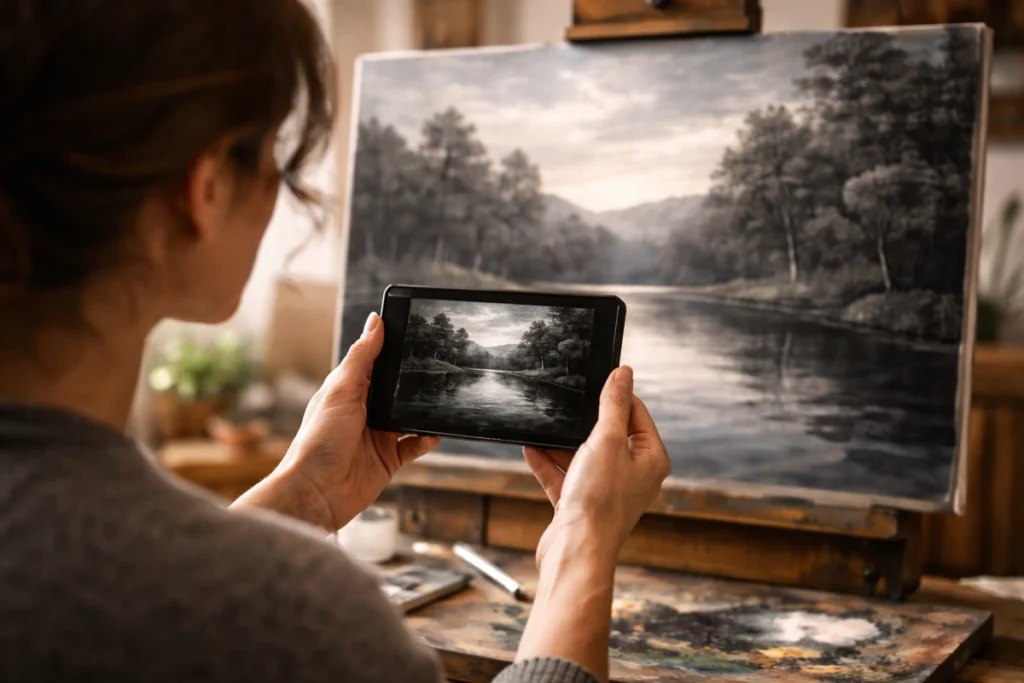
Take a look at how the black mirror technique works.
- The Black Mirror Setup: At first, your phone becomes a filter when you turn off the display and look through the reflection. It removes most color and shows only light and dark values in your space, and helps you see what’s creating the image.
- Framing Your View: After that, you’ll want to mark out a rectangle on your paper or canvas that matches your screen’s ratio. Then aim the black mirror at a window, simple landscape, or interior scene (skip the self-portrait at first since those get tricky).
- What You’re Drawing: The image you see through the black mirror gets translated into grayscale using markers or pre-mixed paint tones. This might sound too simple to work, but stripping away color forces you to focus on how light creates shapes and detail.
- Tracking Your Speed: This 15-minute daily practice sharpens your eye to see value and composition faster when you work quickly. Plus, the less time you spend on each study, the better your brain gets at recognizing the most important element in a scene.
This painting practice works as a daily warm-up, or anytime you don’t know what to create next. Once you’ve practiced with black mirror for a while, making art like this becomes more natural and less intimidating.
Where to Find Slow Art: National Gallery and Beyond
The National Gallery offers free admission and quiet morning hours that work perfectly for slow looking sessions. If you can walk in early, you’ll get fewer crowds and more space to spend real time with the artworks in their collection.
Along with that, many US museums now host slow art days with guided creative mindfulness activities for families and adults. These events bring the community together around the idea of looking longer instead of rushing through galleries. Some even pair mindfulness education with art viewing.
But the best news is: you can practice this at home too. Say, a postcard, a framed print, or even a book cover you see daily can become your collection for slow looking. Simply, pick one piece and spend five minutes with it once a week.
The National Gallery’s artworks are incredible, but so is whatever art you already have on your walls.
Your First Slow Looking Session Starts Now
Slow art requires zero memorizing technique or understanding centuries of art history. All you need to do is just look longer and let yourself feel whatever comes up. That’s the whole practice, and you can do it when you’re standing in a gallery or while sitting at home.
So start with one painting, print, or even a photo on your wall, and you might enjoy painting more after you learn to see what’s there. Because the details you catch during slow looking often show up later in your own creative work.
And if you want to go deeper into your creative practice, The Heart Project offers workshops and courses that help you build confidence through hands-on art making. Visit us to explore classes that fit your schedule and skill level.
Leave a Reply