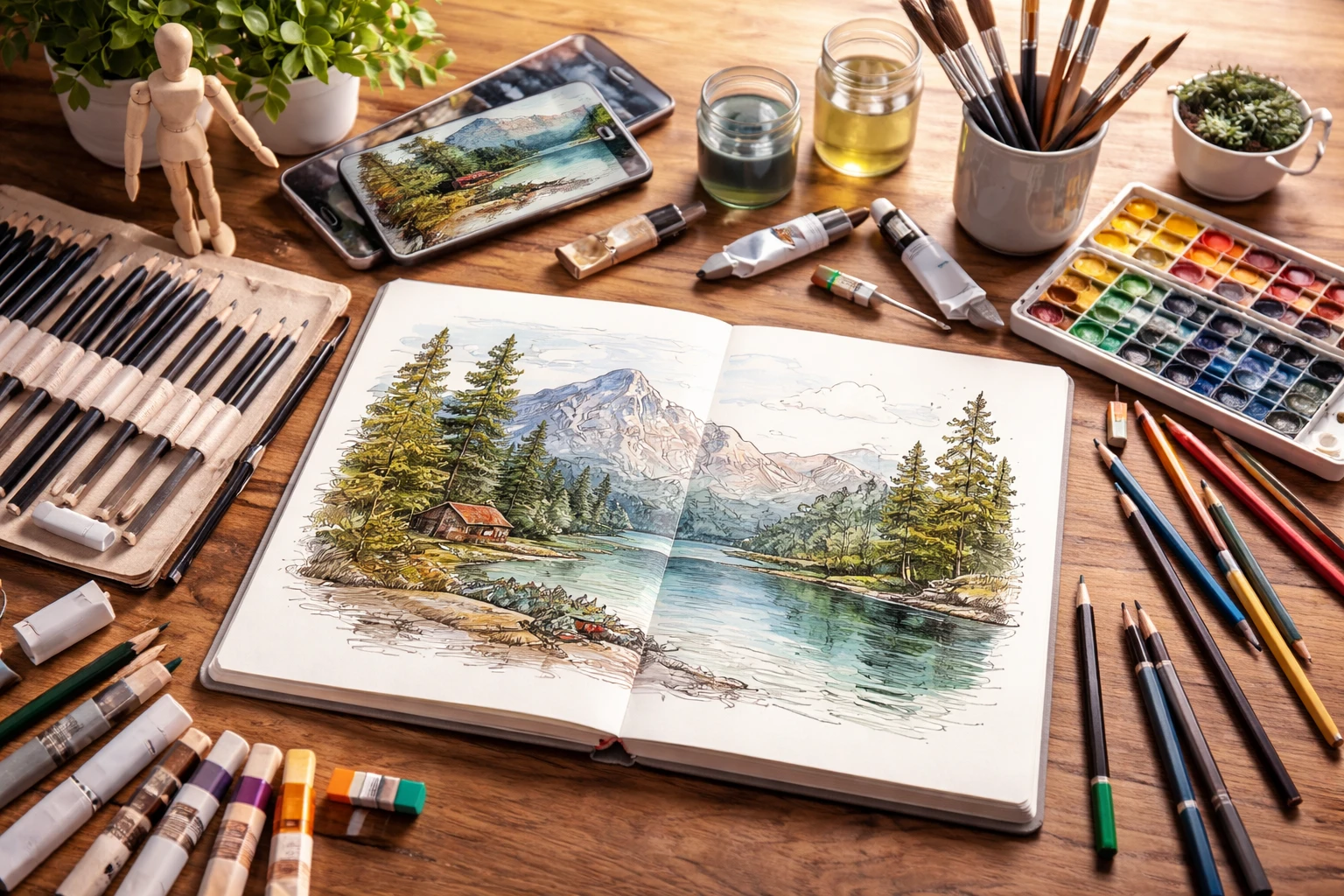
According to the National Endowment for the Arts, 52% of adults created or performed some form of art in 2022. That’s over half the country picking up a paintbrush, pencil, or sketchpad at some point during the year.
The problem is that most beginners hit a wall after their first few attempts and assume they’re missing some natural talent. They don’t realize that drawing and painting are skills you build through specific techniques that anyone can learn with a bit of regular practice.
This article breaks down how to use basic shapes to sketch anything you see and mix colors for oil painting projects. You’ll also learn how color theory changes the way you approach every piece of artwork you create.
Let’s begin with understanding what’s stopping you from becoming an artist.
Why Learning Art Feels Harder Than It Should
Learning art sounds difficult because many people expect instant talent instead of realizing that it takes time and practice to develop skills.
If you’re a beginner, you need to understand how your brain actually learns to create art. Most beginners get stuck because they’re chasing perfection on day one instead of building the foundational habits that artists actually use (and honestly, most quit within the first month).
But once you know what slows people down, you can skip those frustrations and start seeing progress in your first few practice sessions.
Take a look at two thoughts that are holding you back.
The Myth Of Natural Talent
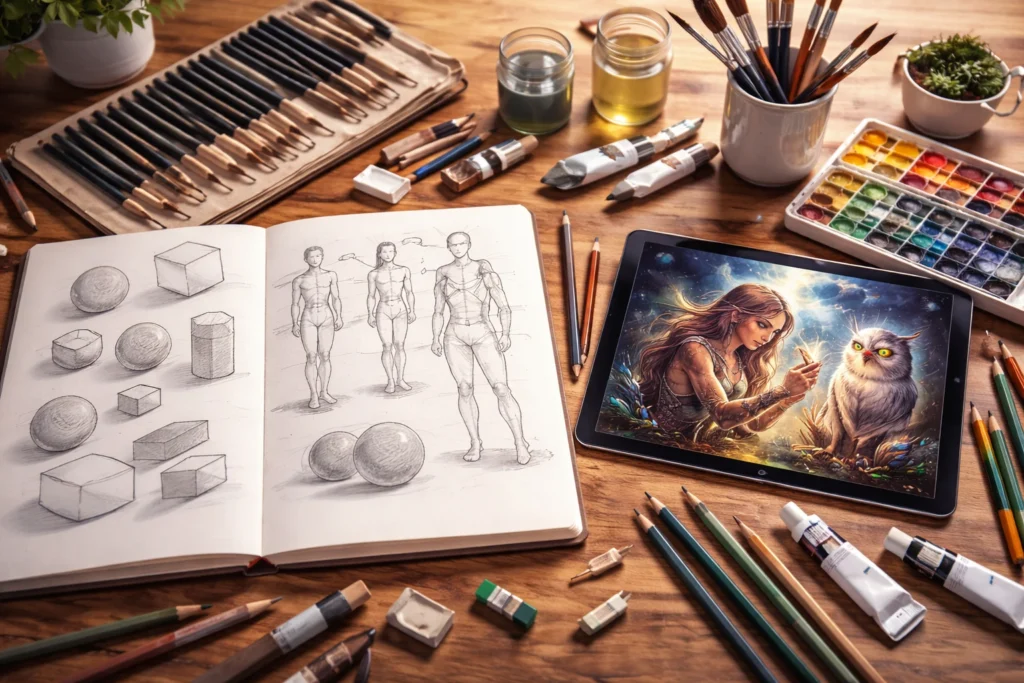
Here’s the thing nobody tells you: when you see amazing artists online, you’re looking at the result of thousands of hours they spent drawing and working with basic shapes.
In fact, research confirms that deliberate practice over weeks and months leads to measurable improvements in skill level and reduced cognitive effort when performing complex tasks.
So, remember that Rome wasn’t built in a day, and neither are drawing skills. Your brain already knows how to learn new motor skills because it’s done this before with writing, typing, or playing sports.
Hand-Eye Coordination is More Important
Drawing is basically training your hand to recreate what your eyes see on paper. And the connection between your brain, eyes, and hand movements gets stronger through simple warm-up exercises.
The good news is that art educators have documented how motor skills improve with daily practice. Only five minutes of drawing circles and straight lines with a pencil before you start your artwork makes a noticeable difference in how smooth it turns out.
Fun Fact: Studies from the National Institutes of Health confirm that visual art activities enhance fine motor coordination and hand-eye coordination more effectively than motor practice alone.
Start Practicing Art The Right Way
The best way to start practicing art is with a simple warm-up routine and basic shape exercises.
They’re practical methods that help you build confidence and muscle memory with every session. The reason they’re so effective is that they remove the pressure of creating something perfect and let you focus on developing your sketching skills naturally.
Here are some of the most effective ways to start your painting session.
Warm Up Before Every Session
Your hand needs to loosen up before you create anything detailed. Think of it like stretching before a workout.
Some simple exercises to stretch your wrist are:
- Scribbles, dots, and zigzag lines
- Try varying your pencil pressure with circles and ellipses
- Locking your elbow and drawing from your shoulder for longer, more fluid strokes
Once you get the hang of these warm-ups, smoother lines will come naturally. This only takes five minutes, but it completely changes how controlled your drawing feels for the rest of your practice session.
Break Everything Into Basic Shapes
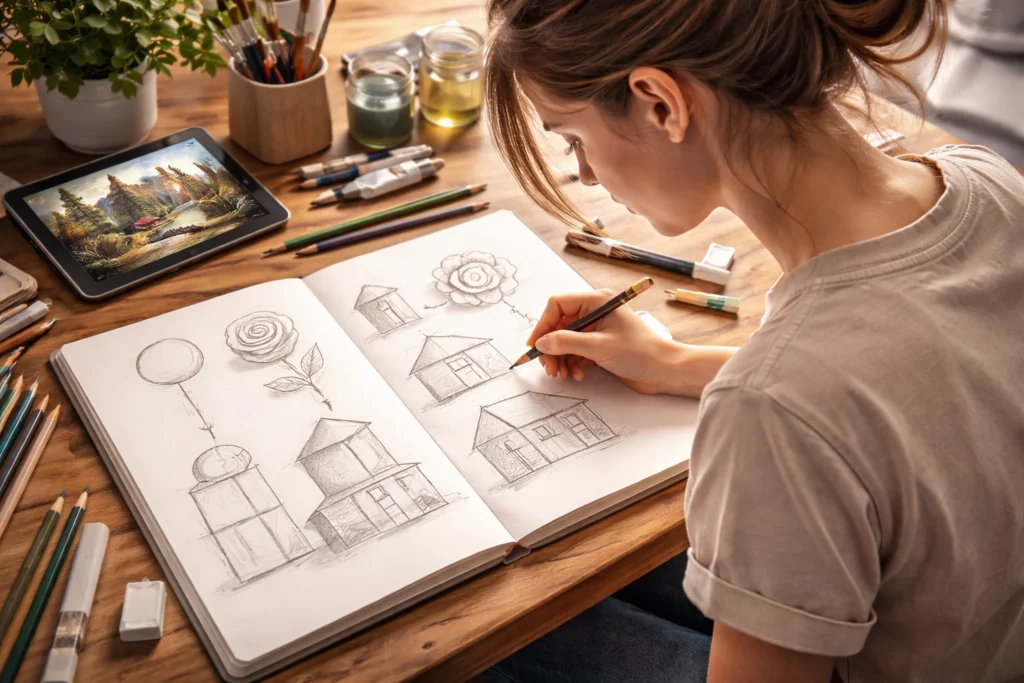
Every complex object indeed starts as simple geometry. Sounds almost too easy, right? In fact, circles, rectangles, and triangles are the foundation of literally everything you’ll draw. Say, a rose? It’s just a circle with a line attached. Similarly, houses start as stacked rectangles before you add details like doors and windows.
Once you train your eye to see basic shapes first, drawing complicated subjects becomes much less overwhelming. And you’re not trying to capture everything at once anymore. That’s why we suggest light sketching of shapes first, then you layer in the unique details.
Art Learning Tips That Build Drawing Skills
While learning different art techniques, you can even see improvement in a few weeks of focused practice. Your progress also speeds up when you combine regular sketching with intentional study methods.
Below you’ll see some specific approaches that professional artists use to develop their skills and refine their creative process over time.
Study Your Favorite Artists Daily
Picking one or two artists whose work makes you say, “I want to draw like that,” gives you a clear target to aim for. It’s because their style speaks to you, and that excitement is what keeps practice from feeling like a chore.
Now you’re probably thinking this feels like copying, but spending 15 minutes recreating their sketches teaches you about line work and shading better than any tutorial could. Gradually, you’ll start to notice their creative process: do they begin with loose, gestural marks or tight, controlled details? How do they handle shadows and light?
This is how artists have learned for centuries. Studying other artists allows you to understand the techniques behind what makes their work compelling, so you can apply those same principles to your own art journey.
Mix Up Your Art Techniques
One day you’re sketching objects around your house, and the next day you’re trying portrait drawing. This switch between subjects keeps your practice interesting and builds different skills at the same time.
You can learn new techniques through trial and error with different subjects. Contrastingly, when you only draw one type of thing, you get good at that one thing but struggle with everything else.
Which is why trying a new art medium every few weeks gives you different possibilities. For instance, charcoal gives you expressive marks, watercolor teaches you about controlling wet paint, and ink pens force you to commit to every line since there’s no erasing.
Work On Color Theory Basics
Understanding how colors mix and complement each other improves your painting significantly. When you can mix primary colors to create secondaries without looking at a chart, it builds your color intuition. Like how red and yellow make orange, but there are dozens of different oranges depending on your ratios.
Also, you can utilize how warm and cool colors completely change the mood of your artwork. To give you an idea, warm tones like reds and oranges feel energetic and close to the viewer’s eye, while cool blues and greens create distance and calm.
Oil Painting: Where To Begin
Oil painting gives you more time to blend colors and fix mistakes compared to faster-drying paints like acrylics. A slower drying time means you can work on a painting over several days, and adjust as you go. This forgiving quality makes oil painting surprisingly approachable for beginners who worry about getting everything right on the first try.
Here’s what you need to start with oil painting.
Supplies You Need For Oil Painting
You don’t need supplies that cost a kidney to start your first oil painting project. In fact, starter sets under $50 work just fine.
These are what should be in your starter kit:
- Primary colors, white, and one or two earth tones cover most of what you’ll paint
- Canvas boards or stretched canvas both work fine for learning
- Odorless mineral spirits to thin your paint and clean brushes between sessions
- Natural bristle brushes hold up better with oil paint than synthetic ones do
These basic supplies help you get started without the high upfront cost that often discourages beginners from trying oil painting. This way, you can focus on learning the techniques before investing in more advanced tools.
Your First Painting Project
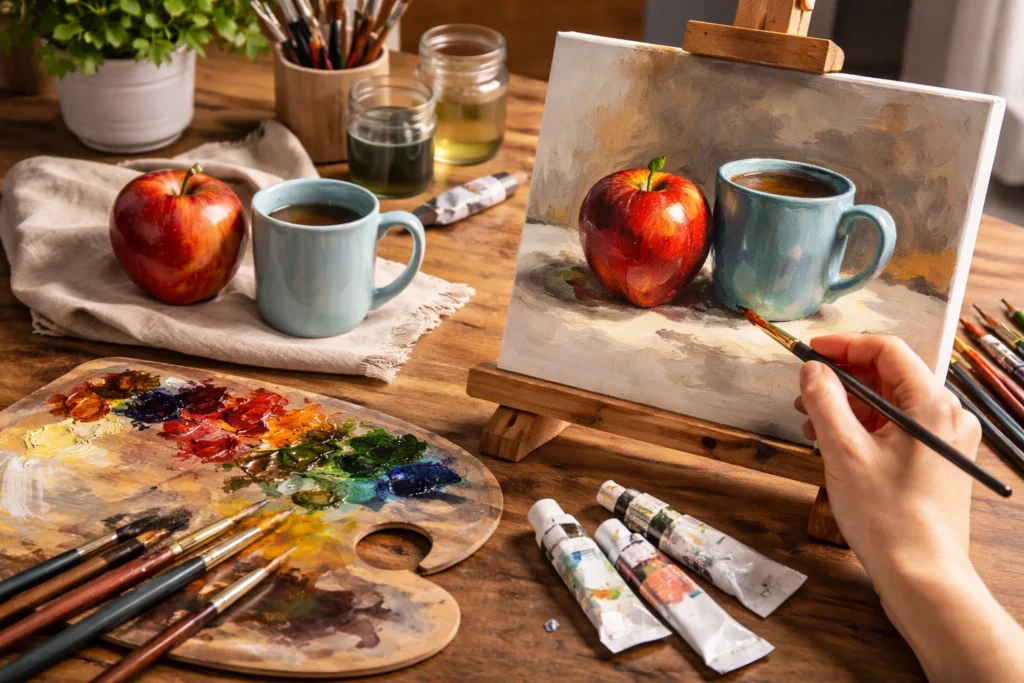
Starting with something simple, like an apple or a coffee mug sitting in front of you, takes the pressure off creating something elaborate. Especially when you can see the object in real life, it becomes easier to match colors and understand how light hits different surfaces.
Our recommendation is to block in the basic shapes with thinned paint first, then gradually build up thicker layers as you add detail.
Oil painting lets you blend colors directly on canvas for smooth color transitions that are hard to achieve with other mediums. So the textured strokes you create with thicker paint will add dimension and interest to your work, even when you’re just painting everyday objects.
Time To Grab Your Pencil
Learning art comes down to becoming regular with some easy techniques. Simple practices like warming up your hand before painting and breaking objects into basic shapes can gradually build up your skill.
So begin with one method from this guide today. Maybe try spending 10 minutes drawing circles and straight lines, or sketch a coffee mug using only rectangles and circles. You’ll notice the difference within days of these exercises.
If you’re ready to enhance your creative process, The Heart Project offers courses that guide you from foundational drawing skills through advanced oil painting techniques. Check out our programs and join a community of artists building their skills together.
Leave a Reply