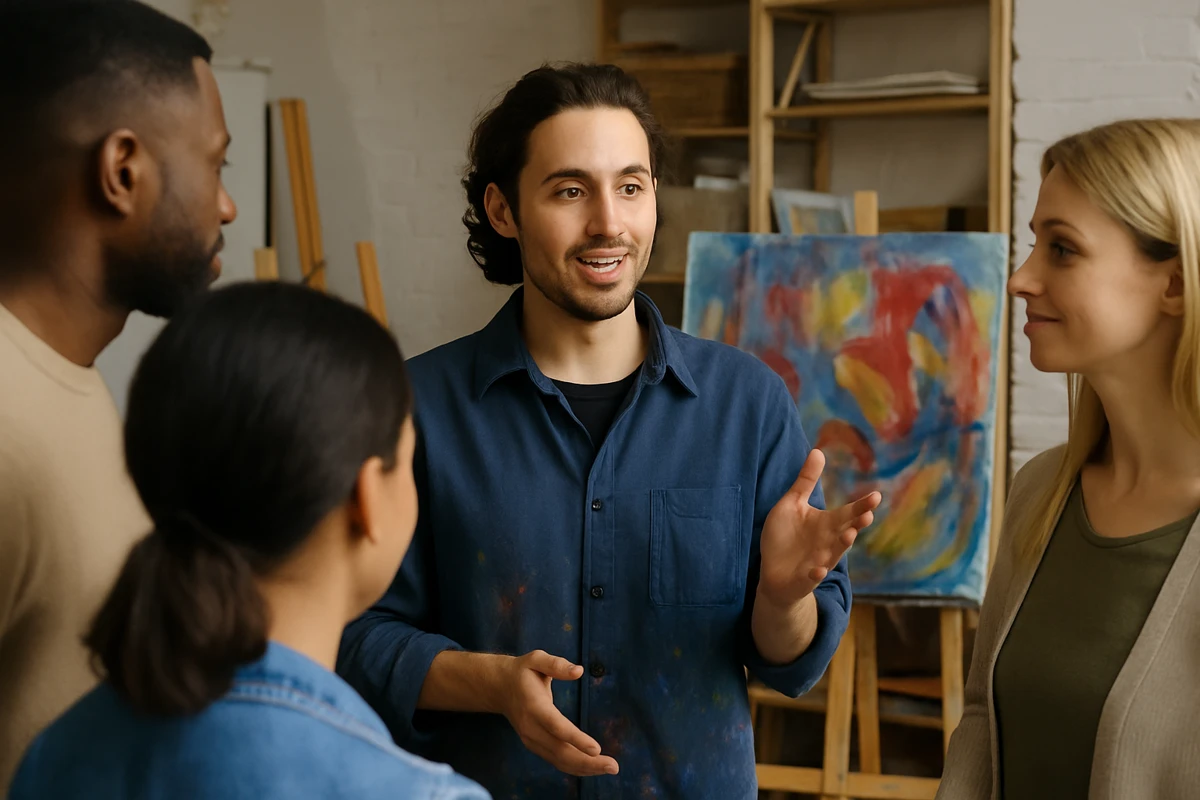
Research from the National Endowment for the Arts shows that students involved in arts education are three times more likely to earn a bachelor’s degree. It’s because art classes teach life skills that students carry with them everywhere they go. We’re talking about the skills that students rely on long after the paint dries.
In this article, we’ll explore how art education builds confidence, develops creative thinking skills, and prepares students for the world beyond the studio. You’ll see how visual arts push students past their comfort zones, turn negative feelings into fuel, and create better problem solvers.
So, let’s find out why art can build confidence in ways you might not expect.
What Makes Art Classes a Confidence Builder?
Art classes build confidence by giving students safe spaces to experiment, make mistakes, and see results from their creative work.
Now here’s what most people misunderstand: confidence doesn’t come from getting everything right. Instead, it builds from constantly trying new things, seeing what happens, and realizing you can handle whatever comes next.
Here are some ways art classes gradually build your confidence.
Creative Thinking Begins With Tiny Steps
Students gain confidence by finishing small projects and watching their ideas turn into something solid. Each completed piece proves they can create something from nothing, which builds belief in their abilities over time.
Say, when a student finishes their first clay sculpture or completes a digital design, that small accomplishment teaches them that they’re capable of tackling bigger challenges. These early victories in art class translate directly to how students approach difficult tasks later. Ultimately, it makes them less likely to give up when things get hard.
Self-Expression Without Judgment
Art studios create safe spaces where students explore ideas without worrying about right or wrong answers. When teachers celebrate individual styles and unique approaches, students learn their perspective has value and deserves recognition.
This freedom to express themselves visually helps students find their voice before they can put feelings into words. For example, a shy student might struggle to speak up in math class but feel completely comfortable sharing bold color choices in their paintings.
That’s the power of self-expression through art.
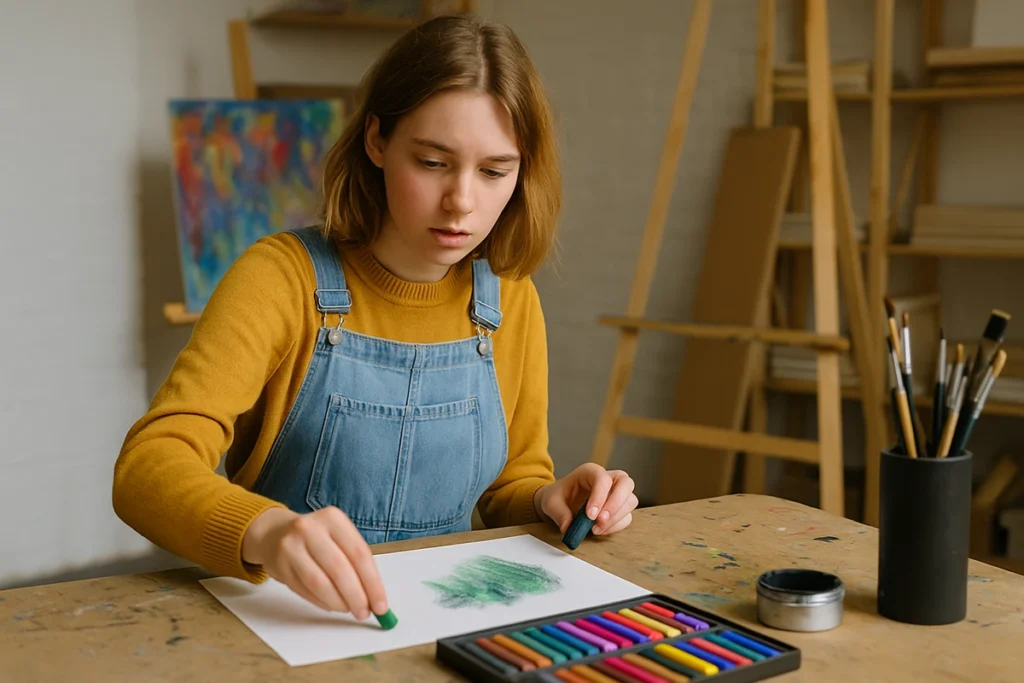
Visual Arts Push Students Past Their Comfort Zones
Ever notice how you grow the most when you’re slightly uncomfortable? Sounds a bit scary, right? But visual arts do exactly that by requiring students to experiment with unfamiliar materials and work through uncertainty.
When you’re creating visual work, it forces you to make decisions without perfect information. It teaches you to trust your instincts, and you end up adapting quickly when things don’t go as planned.
And when students see their experimental pieces succeed, they realize that staying comfortable actually limits growth and exploration. Gradually, new things become less scary once you’ve already pushed past a few creative boundaries.
Building Confidence Through Creative Skill Development
The best part about creative skill development is watching students realize they’re capable of more than they thought. Especially when students stop worrying about perfect results, it changes their focus from getting everything right to enjoying the process of discovery.
Take a look at how creative skill development can improve your confidence.
Trying New Things Without Fear of Failure
Art classes reframe mistakes as learning opportunities and remove the pressure to get everything right immediately. Students find out that failed attempts teach more than successes. It makes them willing to experiment freely and learn the ropes at their own pace.
This change in mindset helps students approach new situations with curiosity instead of anxiety about outcomes. Because a painting that doesn’t turn out as planned becomes a lesson in color mixing rather than a personal failure.
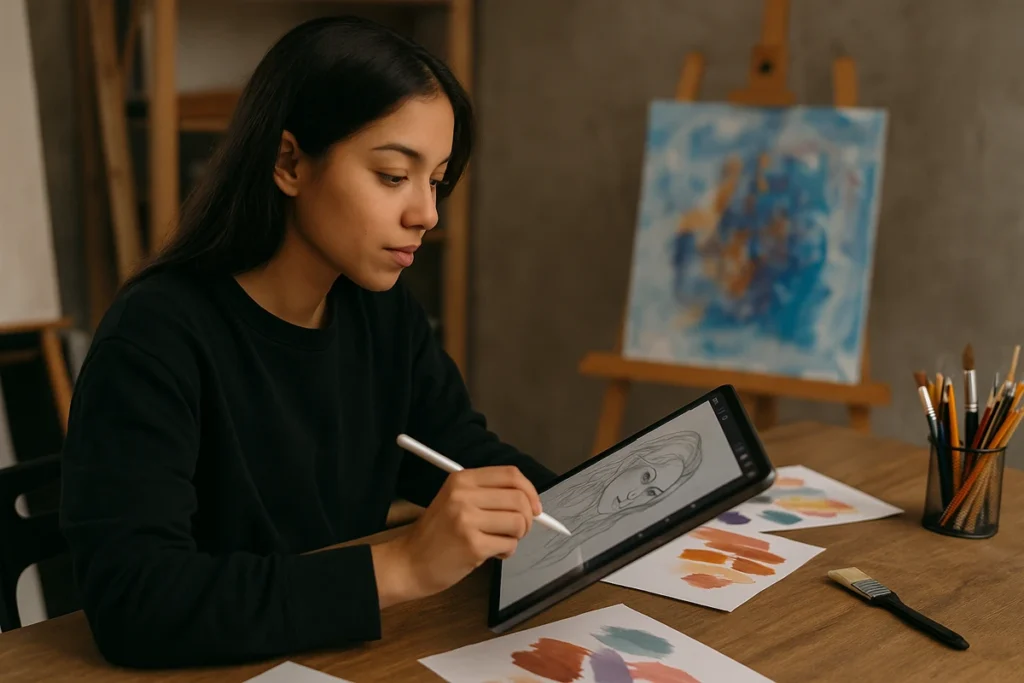
Digital Art Opens Fresh Perspectives
When students attempt to learn digital tools, it shows that they can master technology while expressing creativity in modern ways. Our work with educational environments has shown that digital art combines technical skills with imagination. It proves that students can excel in multiple areas at once.
Working with software builds confidence in adapting to new platforms and learning independently. Plus, tools for graphic design programs or animation software give students practical abilities that they’ll use outside the art room.
Turning Negative Feelings into Creative Fuel
Art gives students healthy outlets for processing difficult emotions instead of bottling them up inside (which schools rarely prioritize, but desperately should).
Channeling negative energy into something beautiful teaches resilience and emotional problem-solving skills. At that time, making art becomes a way to process the world when words aren’t enough.
Now that you understand how art builds confidence in the studio, let’s look at where else it manifests.
How Confidence from Art Carries into Daily Life
Art becomes a training ground for life skills that most students don’t even realize they’re learning. The skills they develop follow them into every part of their lives.
These are some of the common character development you can get:
- Problem Solving in Academics: Students can apply the same thinking from art class to subjects like math and science. It’s because when you’ve learned to solve complex problems with a paintbrush, tackling a tricky equation doesn’t seem so impossible.
- Presentation Skills and Public Speaking: You get to practice standing in front of classmates to defend creative decisions and articulate your thinking clearly. These skills come in handy later in job interviews and any other situation where you need to express ideas confidently.
- Collaboration and Teamwork: Group art projects teach compromise and working toward a shared vision. This makes collaboration easier in school projects, sports teams, and eventually workplace settings.
- Time Management Under Pressure: Juggling multiple art pieces with different deadlines develops natural time management skills. These organizational abilities become second nature and apply to everything from homework to part-time jobs.
At the end, students who once struggled to come out of their shell learn to vocalize through creative expression first. That confidence then follows them everywhere else.
Creative Thinking Helps You See Problems Differently
Creative thinking encourages students to test ideas, make connections, and explore possibilities they might otherwise overlook. It trains them into thinking, “What if the solution to your problem was sitting right in front of you, just from a different angle?”

Here are some ways you can learn to see problems differently.
Looking at Challenges with Fresh Eyes
Art training teaches students to observe the details that others miss, and helps them spot solutions hiding in plain sight. Creative thinkers approach obstacles by asking “what if” instead of accepting that things must stay the same.
Artists have a way of looking at everyday objects and see potential where most people see nothing special. This change in perspective turns roadblocks into opportunities for innovation and unexpected breakthroughs for better outcomes.
Asking Questions That Lead to New Solutions
Students learn questioning techniques that reveal deeper issues beneath surface problems. It’s because curiosity becomes a tool for discovery when students practice asking why things work certain ways.
When students get comfortable asking “why not?” in art class, they start applying that same thinking everywhere else. And bit by bit, better questions lead to better answers, even when you’re solving real-world issues.
Start Your Creative Journey
If you think art classes only teach you technical skills, you’re completely wrong. Instead, they change how students see themselves and their capabilities.
When students learn to express ideas visually, take creative risks, and solve problems with fresh perspectives, confidence follows them by default. These skills are passed on to academics, careers, and personal relationships. And that’s how it makes art education an investment in long-term growth and success.
The Heart Project understands this strength and supports creative programs that help students discover their potential and achieve their goals. And we encourage you to consider enrolling in art classes or supporting arts education in your community to inspire innovation and positive culture wherever you go.
Leave a Reply